
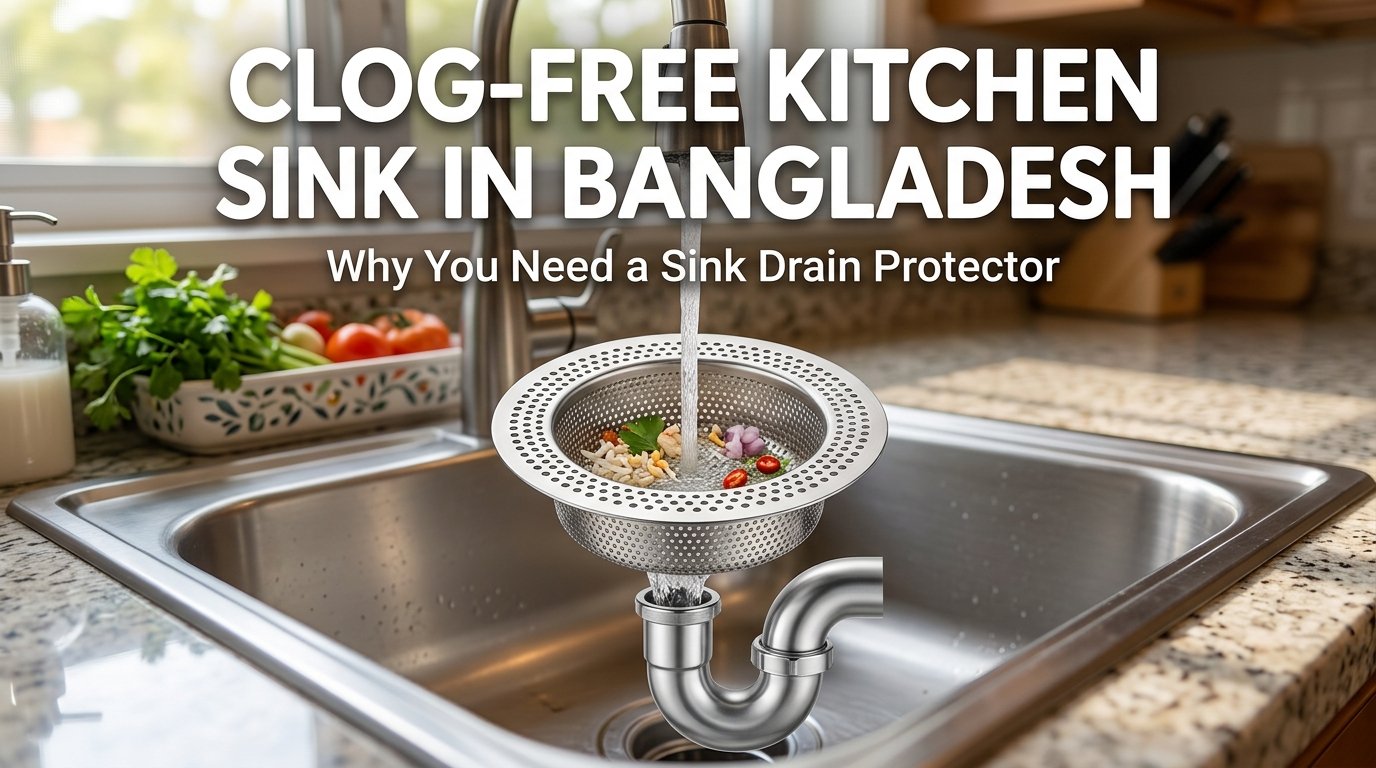
Managing a modern kitchen in Bangladesh often comes with daily frustrations, especially when dealing with limited apartment space, messy food prep zones, and clogged plumbing. Using a simple yet effective sink drain protector is the easiest way to catch debris before it clogs your pipes, keeping your kitchen hygienic, functional, and hassle-free.
Why Every Bangladeshi Kitchen Needs a Sink Drain Protector
Kitchen sinks take a massive beating during everyday meal preparation, handling everything from leftover rice grains to vegetable peels. When food particles slip down unprotected drains, they cause frustrating blockages that disrupt your workflow and invite foul odors.
Installing a reliable sink drain protector stops solid waste right at the surface while letting water flow freely. In humid urban environments like Dhaka, preventing organic waste from lodging inside moist U-bends stops mold growth and pest infestations. Furthermore, keeping your drainage lines clear saves you from unexpected emergency plumber bills.
The Anatomy of a Clog-Free Kitchen Sink
Understanding how drainage systems fail helps you appreciate why a simple mesh strainer makes such a massive difference. Most household blockages develop gradually over weeks of unmonitored washing.
- Grease Accumulation: Cooking oils solidify inside cold pipes, narrowing the interior diameter.
- Starch Buildup: Rice, pasta starches, and flour create a sticky paste when mixed with water.
- Organic Debris: Tiny bits of onion skin, coriander leaves, and chili seeds slip past wide drain openings.
- Mineral Deposits: Hard water minerals coat pipe walls, trapping finer particles over time.
Placing a fine-mesh barrier at the entry point intercepts organic debris before it ever touches your pipe walls. Combining this with a quality kitchen sink upgrade ensures your washing zone handles heavy family cooking with absolute ease.
Types of Sink Drain Protectors Available Today
Different kitchen setups require specific strainer designs to maximize debris capture without slowing down water drainage. Selecting the right model depends on your sink material and daily cooking style.
1. Stainless Steel Mesh Strainers
Stainless steel units offer unmatched durability and rust resistance against harsh dishwashing liquids. Their micro-perforated holes catch microscopic food particles while maintaining high water flow rates. These strainers wipe clean effortlessly and match modern metallic sink finishes.
2. Silicone Basket Strainers
Flexible silicone options are gentle on fragile glassware and absorb impact if heavy pots accidentally hit the drain. They feature an integrated central post or handle that makes lifting and emptying collected debris completely hygienic. They come in various colors to match your kitchen interior theme.
3. Dual-Function Stopper-Strainers
These versatile units combine a stopper mechanism with a strainer basket, letting you fill the basin for soaking dishes or switch to drainage mode instantly. They fit standard urban apartment plumbing connections seamlessly without requiring professional tools.
Step-by-Step Guide to Maintaining a Clean Drainage System
Maintaining a free-flowing kitchen sink requires a consistent daily and weekly routine. Follow these steps to protect your plumbing infrastructure.
- Scrape Before Rinsing: Always wipe plates with a paper towel or scrape food scraps into a bin before washing.
- Empty the Strainer Frequently: Lift your sink drain protector and dump trapped solids into your compost or trash bin after every heavy meal prep session.
- Flush with Hot Water: Pour a kettle of hot water down the drain weekly to melt minor grease accumulations.
- Inspect the Seals: Check rubber gaskets and under-sink connections monthly for early signs of slow leaks or moisture buildup.
Pairing your sink maintenance routine with smart washing accessories like a dish holder keeps your entire countertop organized and dry.
Essential Companion Hardware for Modern Kitchens
A clean sink area is only one part of a well-optimized cooking space. Organizing your cleaning tools, sponges, and drying items around the basin prevents clutter and cross-contamination.
- Sponge and Soap Caddies: Keep wet sponges elevated so they dry quickly, preventing bacterial growth near your washing zone.
- Over-the-Sink Drying Racks: Expand your prep area by adding roll-up or resting racks that drain washed produce directly into the basin.
- Under-Sink Storage Baskets: Maximize the dark cabinet space beneath your plumbing traps using sliding pull-out organizers.
Integrating versatile hardware solutions such as a sink support rack ensures your heavy basin stays securely anchored to the countertop without shifting.
Common Mistakes to Avoid When Managing Kitchen Drains
Even with a protective strainer installed, certain habits can compromise your plumbing system over time. Avoid these frequent errors to protect your home.
Warning: Never pour leftover cooking oil, ghee, or melted fat directly down any kitchen drain, as it solidifies deep inside the pipes where hot water cannot reach.
- Overloading the Basket: Letting food pile up too high forces water to back up and pushes debris underneath the rim.
- Using Harsh Chemical Cleaners: Frequent use of abrasive chemical unblockers corrodes metal pipe joints and damages PVC seals.
- Neglecting Regular Washing: Failing to wash the strainer itself lets slime and bacteria build up right where you wash your dishes.
- Ignoring Slow Drains: Waiting until a drain is completely blocked makes clearing it much harder and riskier for older apartment plumbing.
Future Trends in Kitchen Sink Hygiene and Smart Design
Modern kitchen design in Bangladesh emphasizes smart ergonomics and hygiene. Urban apartments now feature integrated workstation sinks equipped with sliding ledges, custom-fit cutting boards, and a durable sink drain protector to prevent clogging. These innovative features streamline food preparation, make cleanup effortless, and maintain a clean cooking space for busy families.
Antimicrobial coatings on stainless steel sinks and drain accessories are also gaining popularity, actively reducing bacterial transfer during raw meat and vegetable preparation. Homeowners are investing heavily in multi-functional accessories that turn compact washing zones into efficient culinary stations.
Pro Tips for Long-Lasting Kitchen Hygiene
- Natural Deodorization: Flush your drain monthly with a mixture of baking soda and warm white vinegar to neutralize odors without harsh chemicals.
- Keep a Scrap Bowl Handy: Place a small desktop bin right beside your cutting board so you never feel tempted to push vegetable trimmings directly into the sink.
- Match Hardware Finishes: Coordinate your drain protector and faucet finish for a cohesive, high-end look.
