
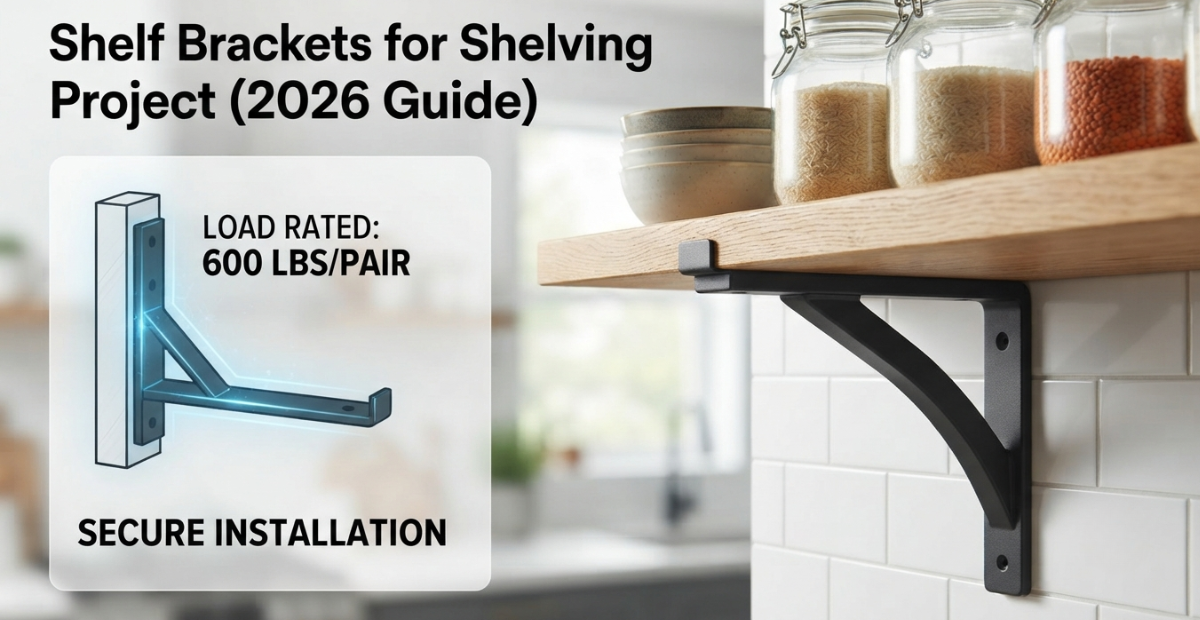
TL;DR: Selecting the correct Pantry Shelf Brackets for a shelving project depends on total load requirements, wall substrate materials, and environmental exposure. For heavy pantry items or kitchen storage.
1. Load Capacity & Pantry Shelf Brackets Selection Framework
Pantry Shelf Brackets for Shelving Projects To ensure structural safety, match your weight requirements against standard bracket engineering profiles before purchasing any hardware.
+————————–+———————–+—————————————+
| Bracket Class | Weight Rating (Pair) | Ideal Applications |
+————————–+———————–+—————————————+
| Light-Duty Decorative | 20 – 50 lbs | Picture frames, small spice racks |
| Medium-Duty Angle | 50 – 150 lbs | General book storage, pantry dry goods|
| Heavy Duty L-Brace | 150 – 600 lbs | Rice sacks, heavy kitchen appliances |
| Industrial Cantilever | 600 – 1,200+ lbs | Commercial storage, heavy machinery |
+————————–+———————–+—————————————+
Calculating Total Load Weight
- Estimate Content Weight: Weigh the heaviest items planned for the shelf (e.g., a 25 kg rice bag plus multiple glass jars).
- Add Shelf Material Mass: Factor in the dead weight of the Pantry Shelf Brackets plank (e.g., solid hardwood or thick granite).
- Apply a 20% Safety Margin: Multiply the total estimated weight by 1.2 to handle unexpected dynamic impacts, such as setting down heavy cookware forcefully.
2. Choosing the Right Bracket Material for Your Environment
Shelf Brackets for Shelving Projects High humidity in kitchen environments requires corrosion-resistant hardware.
- Stainless Steel: Grade 304 stainless steel Pantry Shelf Brackets supports provide ultimate protection against moisture, rust, and oil vapors. They are essential for kitchens, laundries, and humid storage rooms.
- Powder-Coated Carbon Steel: High durability for heavy duty shelf brackets in dry living rooms or pantries. The powder coating prevents surface oxidation while maintaining high tensile strength.
- Forged Iron: Adds visual appeal for open shelving brackets BD interiors, though exposed iron requires a protective sealant to prevent rust spots in humid climates.
- Extruded Aluminum: Lightweight option for moderate loads. Non-corrosive, but offers lower sheer strength under extreme weight compared to forged steel.
3. Wall Substrates and Anchor Selection
Shelf Brackets for Shelving Projects A bracket is only as strong as the anchor holding it to the wall structure.
Warning: Never use standard plastic drywall anchors for shelves carrying kitchen appliances or heavy bulk groceries. Always secure brackets directly into wood studs, solid concrete, or reinforced masonry.
Substrate Anchor Matrix
- Solid Concrete / Red Brick: Use steel expansion wedge anchors or heavy-duty masonry plugs.
- Hollow Concrete Block: Use toggle bolts or heavy-duty sleeve anchors that expand inside the hollow cavity.
- Drywall over Steel Studs: Use heavy-duty toggle bolts rated for shear load, or bridge two studs with a wooden backing plate.
- Solid Timber Studs: Drive heavy-duty lag screws (minimum 2.5 inches length) directly into the center of the wooden stud.
4. How to Properly Space Pantry Shelf Brackets
Shelf Brackets for Shelving Projects Proper spacing prevents shelf deflection (sagging over time). Even the strongest bracket cannot stop a thin wood board from bending in the middle if the span is too wide.
- Standard Spacing Rule: Space brackets every 16 to 24 inches for softwoods, plywood, or particleboard.
- Heavy-Duty Spacing Rule: For heavy pantry storage carrying cast iron pots, rice sacks, or bulk liquids, space brackets every 12 to 16 inches.
- Overhang Limits: Ensure the shelf plank does not overhang the outer brackets by more than 6 inches on either end to avoid tipping leverage when weight is placed on the edge.
5. Step-by-Step Installation Guide
Shelf Brackets for Shelving Projects Follow this technical sequence to install stable, level open shelving in your home.
Preparation & Layout
- Locate Wall Studs: Use an electronic stud finder or masonry detector to mark secure mounting points.
- Mark the Level Line: Use a 2-foot spirit level or laser level to draw a straight horizontal line across your installation area.
- Mark Pilot Holes: Hold the first bracket against the wall line and mark the screw placement holes with a pencil.
Mounting the Brackets
- Drill Pilot Holes: Drill precise pilot holes matching the exact diameter recommended for your wall anchors.
- Set Anchors: Insert masonry plugs or steel anchors flush with the wall surface.
- Secure Brackets: Drive the primary mounting screws, checking vertical alignment with a torpedo level before fully tightening.
- Attach Shelf Board: Place your shelf plank across the brackets and secure it from underneath using short wood screws through the bracket mounting holes.
6. Smart Kitchen Storage Applications
Shelf Brackets for Shelving Projects Modern kitchen configurations in urban apartments benefit immensely from vertical storage solutions.
- Under-Cabinet Storage: Mount slim pull-out systems or small support brackets to clear space near sink areas. For instance, organized spice setups can be enhanced using a dedicated spice bottle rack.
- Deep Cabinet Optimization: Install adjustable bracket tracks inside deep pantries to host specialized revolving corner baskets for maximum space utilization.
- Heavy Cookware Stations: Pair heavy duty shelf brackets with solid wood planks to store heavy cast iron pans, rice cookers, and blender bases without taking up valuable countertop real estate.
7. Common Installation Mistakes & How to Avoid Them
- Ignoring Bracket Depth: Shelf Brackets for Shelving Projects The support arm of the bracket should extend at least 70% to 80% of the shelf plank depth. Short brackets create excessive leverage that tears anchors out of the wall.
- Using Incorrect Screw Length: Shelf Brackets for Shelving Projects Screws that are too short will strip under load. Ensure screws penetrate at least 1.5 inches into solid wood studs or wall anchors.
- Overestimating Board Thickness: Shelf Brackets for Shelving Projects Thin boards (under 3/4 inch) sag under modest loads even if the brackets themselves are heavy-duty. Choose thicker solid timber or high-density marine plywood.
- Neglecting Humidity Resistance: Shelf Brackets for Shelving Projects Installing unpainted carbon steel hardware in damp kitchen areas leads to rust stains on shelf boards and wall surfaces over time.
8. Maintenance and Safety Inspections
Shelf Brackets for Shelving Projects Regular maintenance ensures your wall-mounted shelving systems remain safe over years of daily use.
- Inspect Anchors Annually: Check for fine hairline cracks in plaster or drywall around bracket mounting points.
- Tighten Loose Hardware: Daily vibration and heavy weight placement can gradually loosen lag bolts; tighten mounting screws once a year.
- Clean Stainless Surfaces: Wipe down stainless steel shelf supports with a mild degreaser to remove grease and moisture buildup that accumulate during cooking.
Modern Kitchen Hardware Directory
[Main Hub] > [Kitchen Accessories]
- Spice Bottle Rack Solutions
- Revolving Corner Basket Systems
- 2 Shelf Pull Out Price in Bangladesh
- Plain Basket Price in Bangladesh
