
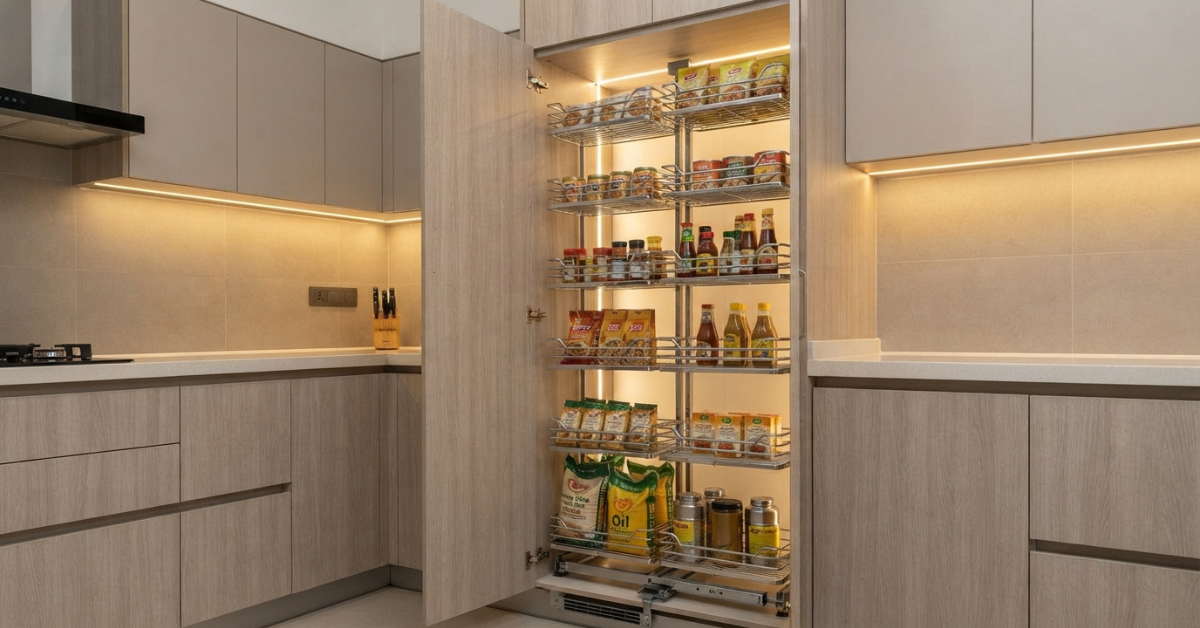
TL;DR: Upgrading your apartment Kitchen larder unit buying guide with a dedicated tall pantry larder unit optimizes vertical space, converting underutilized corner inches into structured, multi-tier storage.
By selecting moisture-rated stainless steel internal baskets and soft-close hydraulic mechanisms, homeowners can effortlessly manage heavy spice jars, rice containers, and monthly dry groceries. This guide covers essential dimensional planning, material selection, weight capacities, and hardware integration for modern Bangladeshi homes.
1. Core Mechanics of Modern Kitchen Larder Units
A Kitchen larder unit buying guide is a full-height, vertical pantry system designed to maximize vertical storage in compact residential kitchen larder unit.
Unlike traditional fixed shelves that require deep reaching, modern larder units utilize full-extension slides and linkage mechanics to bring all stored contents forward when the door opens.
Key Architectural Configurations
- Direct Door Pull-Out Larders: Wire baskets attach to the door, pulling the entire multi-tier frame forward for full visibility.
- Swing-Out & Tandem Pantry Systems: Opening the door triggers front baskets to swing out while rear baskets automatically glide forward.
- Individual Inner Pull-Out Drawers: CHidden behind a tall door, each independent drawer box allows custom vertical shelf spacing.
+———————————————————————–+
| LARDER UNIT ANATOMY |
+———————————————————————–+
| [ Top Guide Runner ] Soft-Close Damping Upper Track |
| [ Multi-Tier Baskets ] Tier 1-2: Light Packets & Condiments |
| Tier 3-4: Heavy Bottled Oils & Spices |
| Tier 5-6: Bulk Lentils & Staples |
| [ Heavy-Duty Base Slide ] Telescopic Track (100kg Dynamic Load Rating) |
+———————————————————————–+
2. Dimensional & Load Capacity Specifications
Selecting the right larder unit requires balancing structural cabinet dimensions with your household’s daily consumption volume. Overloading weak frames or miscalculating cabinet depth causes drawer sag, frame misalignment, and runner friction.
| Larder Configuration | Standard Width | Minimum Carcass Depth | Typical Height Range | Dynamic Weight Rating | Best Suited For |
| 4-Layer Compact Unit | 300mm – 400mm | 500mm | 1200mm – 1500mm | 45 kg – 60 kg | Small 2-BHK apartments, supplementary oil & sauce storage |
| 6-Layer Tall Unit | 400mm – 450mm | 550mm | 1800mm – 2100mm | 80 kg – 100 kg | Standard family homes, monthly grocery bulk storage |
| 12-Layer Tandem Pantry | 600mm – 900mm | 550mm | 1900mm – 2200mm | 120 kg + total capacity | Joint family kitchens, high-volume dry food management |
3. Selecting Core Materials for Humid Climates
High ambient humidity, steam from open cooking, and frequent spice usage require heavy-duty core materials. Choosing low-grade board cores inevitably leads to water swelling and sagging hardware mounts.
[ Material Selection Path ]
[ High Humidity & Steam ] [ High Weight Load ]
( PVC / WPC ) ( HPL Board ) ( Marine Plywood ) ( Solid Wood )
Zero Swelling Water Resistant High Screw Retention Classic Look
Carcass & Frame Materials
- High-Pressure Laminate (HPL) & Marine Plywood: High-density plywood sealed with HPL offers high screw-retention strength, resisting moisture absorption near prep sinks.
- PVC & WPC (Wood-Plastic Composite) Boards: Completely impervious to rot, water decay, and termite infestation. Ideal for floor-level base structures in warm climates.
- Powder-Coated Steel vs. SS304 Baskets: Internal wire frames should feature Grade 304 Stainless Steel or electroplated chrome finishing to prevent rust spots caused by salt or liquid condiment spills.
4. Essential Hardware & Accessory Integration
A tall cabinet’s longevity depends on the internal mechanisms driving daily motion. Soft-closing dampers, heavy-duty runners, and specialized inner organizers transform a static tall box into a responsive storage station.
Critical Hardware Components
- Telescopic & Tandem Runner Slides: High-capacity ball-bearing or undermount tandem slides distribute heavy downward loads evenly, ensuring silent operation under full capacity.
- Hydraulic Soft-Close Dampers: Prevent heavy, fully loaded pantry doors from slamming against the cabinet carcass, reducing wear on wood joints and preventing glassware collisions inside.
- Dedicated Internal Accessories:
- Spice Racks & Bottle Dividers: Keep tall mustard oil bottles and sauce containers upright during rapid door movement.
- Rice & Grain Containers: High-capacity airtight dispensers prevent pest entry while keeping daily staples accessible.
- Tiered Cutlery & Tray Organizers: Custom drawer inserts keep cooking utensils sorted systematically.
Pro Tip: Always verify the dynamic load rating of the runner mechanism rather than its static rating. Dynamic ratings reflect the real-world weight the slides can handle smoothly while moving back and forth multiple times a day.
5. Architectural Integration: Step-by-Step Layout Planning
Integrating a tall pantry unit into your existing kitchen larder unit requires clear measurements and space allocation.
[ STEP 1: Spatial Audit ] [ STEP 2: Appliance Clearance ]
Measure height, width, and Calculate swing clearance for
carcass depth precisely. refrigerators and ovens.
[ STEP 3: Zone Mapping ] [ STEP 4: Power & Vent Prep ]
Place larder adjacent to prep Ensure airflow around gas lines
or refrigeration zones. and built-in heat sources.
- Conduct Precise Dimensional Audits: Measure floor-to-ceiling heights, wall plumbness, and cabinet carcass clearance. Account for door trim and adjacent wall skirtings.
- Position Relative to Workflow Zones: Place your Kitchen larder unit buying guide adjacent to the prep station or refrigerator. This minimizes foot traffic while cooking, keeping ingredients within arm’s reach of the main prep counter.
- Evaluate Appliance Door Swing Clearances: Ensure adjacent refrigerator doors, built-in ovens, or wall cabinets do not collide with the larder handle when fully extended.
- Optimize Internal Tier Heights: Set lower tiers with generous vertical clearance for heavy rice containers and tall oil jugs, reserving upper narrow tiers for lighter dry food packets and spice jars.
6. Budgeting & Cost Breakdown in Bangladesh
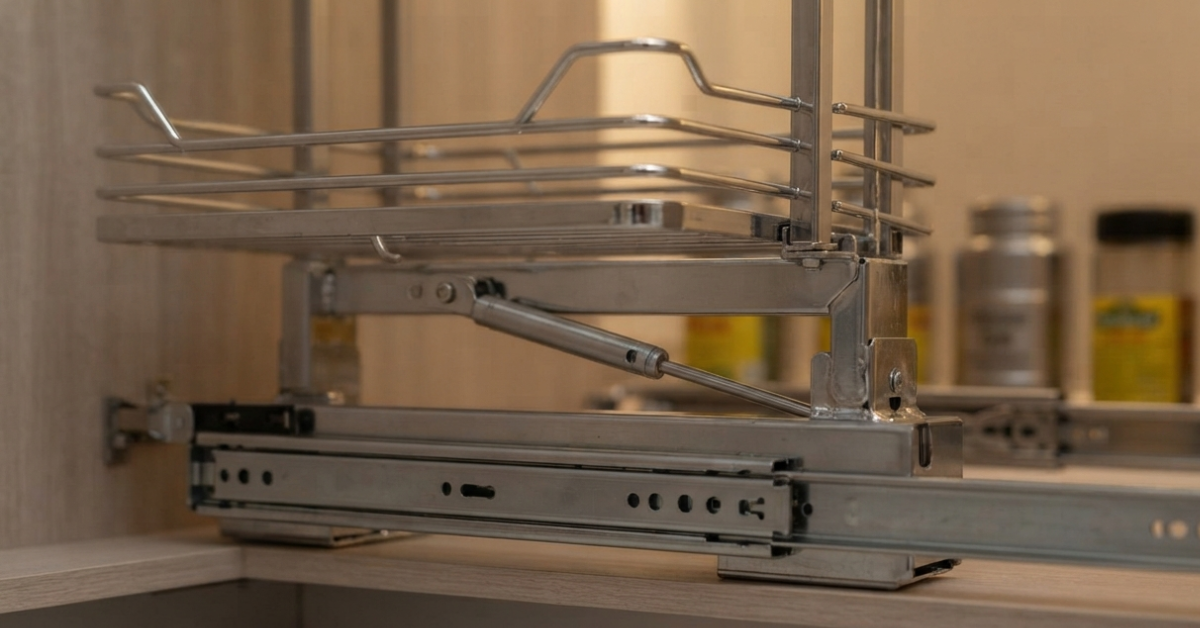
Investing in a larder unit involves two distinct costs: the outer wood/HPL cabinet carcass constructed by interior fabricators, and the imported internal metal basket hardware mechanism.
| Component Category | Entry-Level Options | Mid-Tier Standard | Premium High-End |
| 4-Layer Larder Basket Mechanism | ৳18,000 – ৳25,000 | ৳26,000 – ৳38,000 | ৳40,000 – ৳50,000 |
| 6-Layer Tall Unit Pull-Out | ৳25,000 – ৳32,000 | ৳33,000 – ৳45,000 | ৳46,000 – ৳52,000+ |
| 12-Layer Tandem Larder Set | ৳30,000 – ৳42,000 | ৳43,000 – ৳55,000 | ৳56,000 – ৳66,000+ |
| Outer Carcass Fabrication (Per Sq. Ft.) | ৳1,200 – ৳1,600 (Melamine) | ৳1,800 – ৳2,500 (HPL/Plywood) | ৳2,800 – ৳4,000+ (Duco/Lacquer) |
7. Common Design Mistakes & Real-World Solutions
Even high-end pantry hardware can underperform if installed incorrectly or mismatched with daily cooking habits.
Mistake 1: Skimping on Internal Frame Gauge
- Problem: Purchasing thin, lightweight wire baskets leads to frame bending under heavy pots or large oil containers.
- Solution: Specify solid 304-grade stainless steel wire frames or reinforced flat-iron basket bottoms capable of handling dense loads without flexing.
Mistake 2: Poor Center-of-Mass Weight Distribution
- Problem: Loading heavy items (like 10kg flour sacks or rice jars) on top shelves makes the tall cabinet top-heavy, straining the upper slides and creating tip hazards.
- Solution: Store heavy bulk items in the bottom two baskets, using middle and upper tiers for lighter spices, dry packets, and condiments.
Mistake 3: Overlooking Ventilation and Gas Line Clearances
- Problem: Enclosing gas piping or heat-generating appliances directly against tall pantry units causes moisture buildup and heat accumulation.
- Solution: Maintain a 2 to 3-inch ventilation gap behind tall cabinet carcasses, and route gas lines through dedicated, easily accessible service channels.
8. Maintenance & Upkeep for High-Longevity Storage
To maintain smooth slide movement and preserve stainless steel basket finishes over years of use:
- Regular Track Cleaning: Vacuum metal runner tracks monthly to remove trapped flour, grain dust, or debris that causes slide friction.
- Immediate Spill Cleanup: Wipe down oil spills or acidic condiment drops immediately with a microfiber cloth to prevent surface discoloration on metal baskets.
- Hardware Lubrication: Apply food-grade silicone spray to ball-bearing drawer slides once a year to preserve smooth, silent gliding action.
- Weight Balancing Check: Periodically check mounting screws on door linkages and frame brackets to ensure daily pull forces haven’t loosened internal fittings.
Next Steps & Resource Directories
Browse Full Directories
Related Articles
- Six Layer Tall Unit Basket
- Four Layer Larder Basket
- Twelve Layer Larder Basket
- Magic Corner Basket System
