
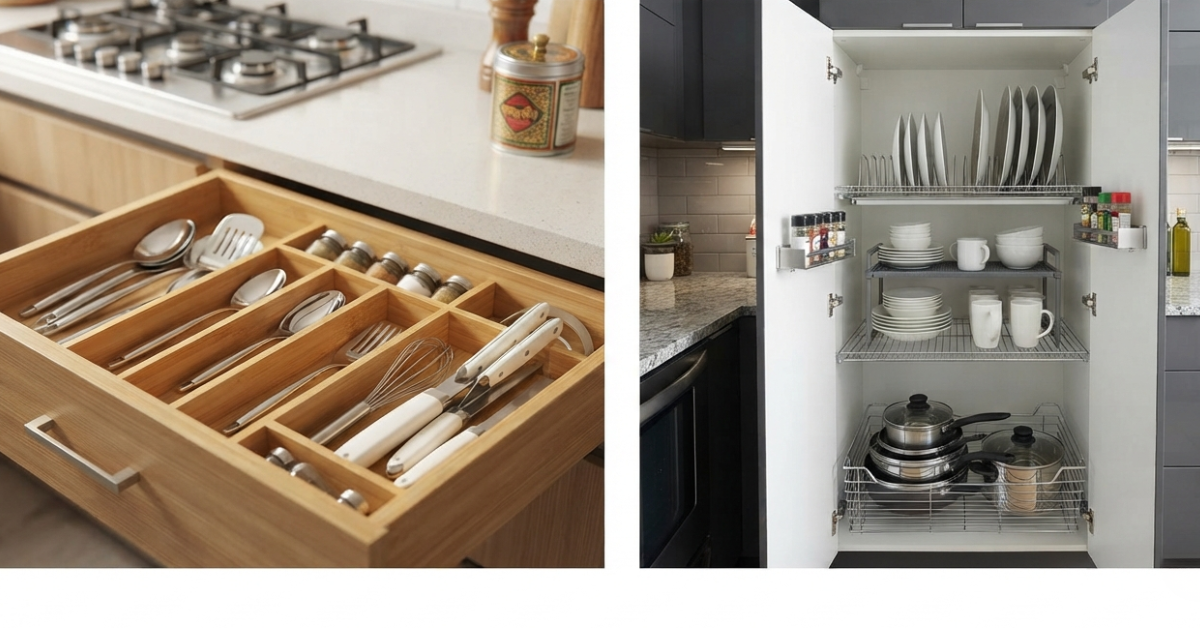
TL;DR Hook: Urban apartment kitchens in Dhaka and Chattogram frequently suffer from chaotic layouts and limited square footage. Installing a functional kitchen cabinet divider instantly transforms messy shelves into structured, accessible storage zones, maximizing every square inch of your culinary space.
Understanding the Anatomy of a Clutter-Free Kitchen
Urban homes across major metropolitan hubs frequently deal with tight spatial constraints and disarray. To put things into perspective, common culinary space challenges include:
- Limited floor plans typical of modern urban flats in Dhaka and Chattogram.
- Messy utensil storage resulting from chaotic, single-level shelving units.
- Outdated cabinetry that fails to handle the volume of modern cookware.
- Poor workflow geometry separating the stove, prep counter, and sink.
Transitioning from cluttered layouts to streamlined cooking areas starts from within the structure itself. Installing a thoughtful kitchen cabinet divider instantly turns chaotic shelves into orderly zones where every pan, plate, and spice jar has a designated home.
Maximizing available capacity requires looking beyond standard shelving and integrating specialized internal architecture. When pots, pans, and cutlery overlap haphazardly, cooking becomes a frustrating exercise in unpacking half your cabinets just to find a single lid.
Implementing structured compartmentalization eliminates this friction completely. By defining precise zones for every category of cookware, homeowners can drastically cut down meal prep times. Furthermore, protecting your high-end kitchen cabinet hardware from the friction of loose, clanging cookware preserves the operational integrity of your storage units.
Why Quality Kitchen Cabinets Matter for Modern Homes
Quality kitchen architecture goes far beyond simple aesthetics, playing a direct role in how efficiently you navigate daily meal preparations. Investing in well-crafted units allows for exceptional space optimization, preventing cookware and dry goods from spilling over onto precious countertop space.
Key advantages of installing premium cabinets include:
- Superior space optimization that keeps countertops clear and surfaces tidy.
- Enhanced internal configuration paired with a sturdy kitchen cabinet divider to locate items instantly.
- Streamlined cooking workflows that minimize unnecessary walking steps between zones.
- Long-term structural durability against local household heat and humidity.
- Higher overall property value when selling or renting out urban apartments.
Structural integrity remains paramount when dealing with heavy ceramic dinnerware, cast-iron skillets, and bulk grocery supplies. Substandard framework sags under weight, warping doors and jamming slide mechanisms within months of installation.
Choosing moisture-resistant multi-layered plywood or high-grade PVC boards prevents environmental warping caused by heavy monsoon humidity.
Integrating a versatile spice bottle rack right beside your prep station keeps daily seasonings within immediate arm’s reach. Ultimately, durable framing combined with smart internal layouts delivers a lifetime of reliable kitchen performance.
Types of Kitchen Cabinets Available in Bangladesh
Choosing the right structure depends heavily on your lifestyle, cooking habits, and available floor space. Different materials serve distinct housing styles across the country:
- Traditional Wooden Units: Classic look and robust build requiring careful moisture maintenance.
- Modern PVC Alternatives: Budget-friendly with exceptional moisture resistance and easy cleaning.
- Modular Systems: Tailored for compact apartments, maximizing space with pre-fitted compartments.
- Custom-Built Options: Personalized designs accommodating unique room layouts and architecture.
| Cabinet Type | Best For | Key Benefit | Durability Level |
| Wooden Cabinet | Traditional homes | Strong & classic look | High |
| PVC Cabinet | Budget kitchens | Moisture resistant | Medium |
| Modular Cabinet | Apartments | Space optimized | High |
| Custom Cabinet | Unique layouts | Tailored design | High |
Selecting the correct material grade safeguards your financial investment against premature wear and tear. Solid teak or mahogany frames bring timeless elegance to sprawling suburban homes, though they demand regular polishing to repel dampness.
Conversely, compact urban flats benefit tremendously from factory-finished modular units that integrate seamlessly with advanced modular kitchen accessories. Balancing aesthetic preferences with structural requirements ensures your kitchen investment withstands decades of active culinary use.
Essential Hardware & Accessories for Functional Cabinets
Hinges & Soft-Close Systems
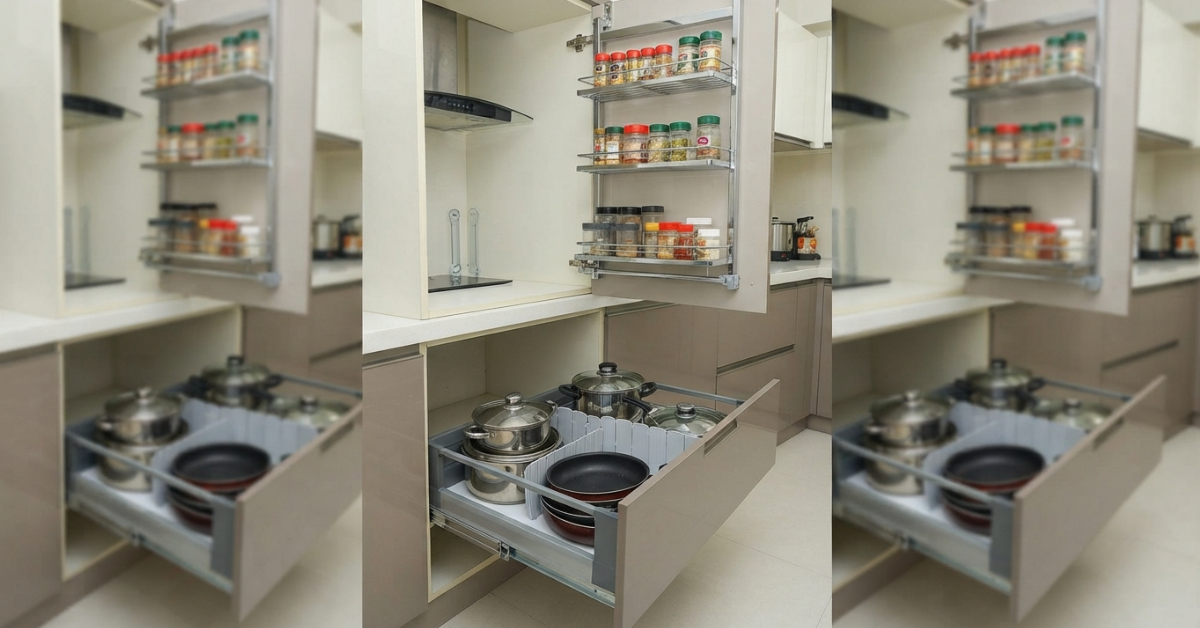
Hydraulic soft-close hinges prevent doors from slamming, reducing wear and tear on the frame while maintaining a quiet, peaceful home environment. These precision-engineered components absorb closing momentum, protecting cabinet edges and extending the lifecycle of wood and PVC panels alike.
Drawer Channels & Runners
Heavy-duty telescopic drawer channels support heavy pots and pans while ensuring smooth, full-extension sliding action every single time. Upgrading to high-capacity runners allows deep drawers to glide effortlessly even when loaded to maximum capacity.
Pull-Out Baskets & Organizers
Multi-tiered wire and stainless steel pull-out baskets eliminate deep-cabinet clutter by bringing pots, pans, and dry goods directly out into view. For instance, installing a functional plate basket keeps heavy dinner sets securely anchored while providing instant vertical access.
Cutlery & Internal Dividers
A specialized kitchen cabinet divider or cutlery insert keeps spoons, forks, and small utensils neatly sorted and prevents shifting during daily use. Pair these inserts with a dedicated cutlery basket to maintain absolute organization across all flatware drawers.
Handles & Finishing Hardware
Ergonomic handles and sleek knobs complete the visual presentation while offering a secure, comfortable grip for heavy-use doors and deep drawers. Choosing corrosion-resistant finishes guarantees that hardware maintains its luster despite exposure to steam, oil splashes, and frequent cleaning.
Step-by-Step Guide to Installing Internal Storage Dividers
Retrofitting your existing kitchen storage with structured dividers requires minimal tools and yields immediate functional rewards. Follow this quick implementation process:
- Clear and Clean: Completely empty the target cabinet or drawer, wiping down interior surfaces to remove dust and grease accumulation.
- Take Accurate Dimensions: Measure the exact interior width, depth, and height to ensure your chosen components fit snugly without shifting.
- Position Tracks: Position adjustable metal or acrylic tracks along the base panel to lock modular separators securely into place.
- Test Alignment: Slide plates, pot lids, or baking sheets into their new designated slots, ensuring smooth clearance when closing doors.
Maintaining these upgraded compartments involves routine checks and gentle cleaning to prevent grime buildup in tight corners.
Wipe down metal divider rods with a damp microfiber cloth and mild dish soap every week to remove cooking oil residue.
Avoid using abrasive scouring pads that can scratch protective finishes and invite rust formation over time. Ensuring proper weight distribution across all divided sections prevents localized warping and keeps sliding tracks operating smoothly.
How to Choose the Right Kitchen Cabinet for Your Space
Selecting the ideal storage framework requires careful pre-planning and accurate measurements of your available floor plan. Core selection steps include:
- Mapping Dimensions: Take precise dimensions of your kitchen walls, accounting for plumbing lines, gas pipe placement, and electrical outlet locations.
- Sizing Proportions: Match the cabinet type and depth directly to your room size, avoiding bulky units that crowd narrow pathways.
- Budget Planning: Establish a clear financial plan early, balancing upfront material costs with long-term durability needs.
- Material Selection: Prioritize moisture-resistant core boards and corrosion-proof hardware to withstand regular cooking humidity.
Optimizing a compact kitchen footprint also demands careful consideration of vertical storage height rather than relying solely on floor space.
Wall-mounted units equipped with an efficient kitchen storage rack free up valuable counter space for daily food preparation tasks. Coordinating your cabinet dimensions with heavy-duty cooking appliances like a modern gas stove ensures a seamless, integrated cooking zone that feels spacious and well-balanced.
Kitchen Cabinet Design Trends in Bangladesh
Modern homeowners are increasingly leaning toward minimalist layouts that feature clean lines and clutter-free horizontal surfaces. Notable aesthetic movements include:
- Modular Dominance: Factory-built setups dominating urban apartment interiors for flexible, compact configurations.
- Subdued Finishes: Neutral color palettes, matte finishes, and handleless push-to-open doors creating open aesthetics.
- Space-Saving Innovations: Pull-out pantries and a built-in kitchen cabinet divider maximizing every structural corner.
Contemporary kitchens also prioritize multi-functional utility zones designed to minimize physical movement during hectic meal preparation hours.
Corner spaces no longer represent wasted dead zones thanks to innovative revolving hardware solutions like a magic corner mechanism that swings deep items straight into view. Combining these high-performance accessories with soft-toned laminates creates an inviting, highly productive environment that meets the rigorous demands of modern city living.
Common Mistakes to Avoid When Buying Kitchen Cabinets
Avoiding common pitfalls saves money and prevents structural headaches down the road. Keep these major errors in mind:
- Choosing Solely on Price: Selecting cabinets based on the lowest price tag often results in premature sagging and hardware failure.
- Ignoring Moisture Resistance: Neglecting humidity protection leads to swollen particle boards and ruined finishes within seasons.
- Poor Measurement Planning: Inaccurate dimensions leave awkward gaps or prevent adjacent drawers from pulling out fully.
- Overloading Without Support: Straining shelves past capacity without internal support accessories weakens joints.
- Compromising on Hardware: Settling for low-grade tracks or hinges results in stuck runners and loose handles.
Investing in top-tier foundational components safeguards your kitchen against costly repairs and premature replacements down the line.
Always verify the weight capacity ratings of drawer runners and hinge assemblies before committing to a specific furniture layout. Incorporating reliable kitchen drawer organizers from the outset prevents the clutter accumulation that typically strains structural joints over years of heavy daily use.
Choosing the right kitchen cabinet and hardware solutions can transform both the appearance and functionality of your kitchen. Investing in quality materials and smart storage ensures long-term convenience and better daily use.
Final Footer Block
- Next Steps & Resource Directories: Browse Full Directories
- [Main Hub] > [Category] Related Articles:
