
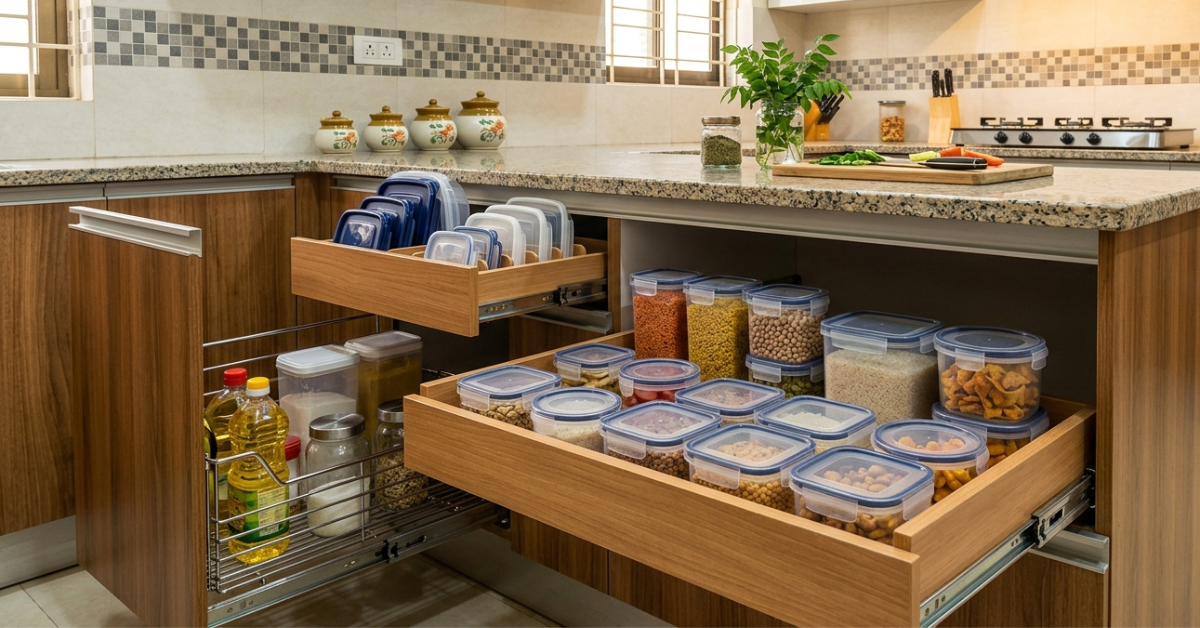
Managing a kitchen in a compact apartment presents daily challenges. Between heavy cookware, spice jars, and dry food containers, unorganized cabinets quickly become chaotic. Implementing smart food container organizer ideas transforms deep shelves into highly efficient storage zones. This eliminates clutter, saves time, and makes everyday meal preparation incredibly seamless.
Strategic Framework for Food Container Organization
Organize compact urban kitchens into ergonomic zones. Group items by use frequency and add pull-out storage to turn deep, chaotic cabinets into fast, efficient prep spaces.
+——————————————————————-+
| VERTICAL WALL SPACE |
| [ Hanging Rails ] [ Magnetic Holders ] [ Tiered Wall Shelves ]|
+——————————————————————-+
|
v
+——————————————————————-+
| BASE CABINET ZONE |
| [ Pull-Out Baskets ] [ Drawer Dividers ] [ Tray Organizers ] |
+——————————————————————-+
|
v
+——————————————————————-+
| DEAD CORNER ZONE |
| [ Carousel Units ] [ Magic Corners ] [ Swing Trays ] |
+——————————————————————-+
Zone 1: Daily Access (Eye & Waist Level)
Keep high-frequency items like daily rice containers, cooking oils, and staple spices between waist and chest height.
Placing frequently used boxes in an accessible 3-shelf pull-out prevents unnecessary bending and speeds up active cooking tasks.
Zone 2: Secondary Storage (Lower Base Cabinets)
Reserve deep lower cabinets for heavy bulk storage, meal prep containers, and specialized serving dishes.
Utilize heavy-duty steel pull-out drawers with full-extension runners so items at the very back slide forward effortlessly into complete view.
Zone 3: Overhead & High Reach
Store lightweight, infrequently used ffood container organizer seasonal bakeware, and extra paper goods on top shelves.
Avoid placing heavy glass containers or fluid bottles above shoulder height to prevent accidental spills or injury.
Technical Specifications: Material & Hardware Quality
Selecting durable kitchen fittings requires analyzing material standards and structural integrity.
High humidity levels and heat from heavy daily gas stove usage accelerate wear on low-quality fittings.
+———————–+
| STORAGE SOLUTIONS |
+———–+———–+
|
+———————-+———————-+
| |
+———-v———-+ +———-v———-+
| BASE CABINET ZONE | | CORNER & WALL ZONE |
+———-+———-+ +———-+———-+
| |
+————+————+ +————+————+
| | | |
+———v———+ +———v———+ +—–v————-+ +—–v————-+
| Pull-Out Baskets | | Drawer Dividers | | Rotating Carousel | | Hanging Rail Racks|
+——————-+ +——————-+ +——————-+ +——————-+
Steel Grades and Rust Prevention
Always insist on SS304 stainless steel for wire baskets and pull-out hardware used near wet zones or cooking hobs.
SS304 offers superior corrosion resistance compared to basic chrome-plated mild steel, which can peel and rust when exposed to moisture and salt.
+—————————————+
| STAINLESS STEEL |
| GRADE COMPARISON |
+——————-+——————-+
|
+——————+——————+
| |
+———-v———-+ +———-v———-+
| SS304 GRADE | | CHROMED STEEL |
+———-+———-+ +———-+———-+
| |
+————–+————–+ +————–+————–+
| | | |
+—v——————+ +——–v—–+ +—v——————+ +—-v—————–+
| High Nickel Content | | Long-term | | Lower Initial Cost | | Prone to Flaking and |
| (Corrosion Resistant)| | Durability | | | | Rust Over Time |
+———————-+ +————–+ +———————-+ +——————–+
Load Capacities and Motion Hardware
Standard cabinet drawers often fail when loaded with heavy glass containers or large grain bins.
High-performance kitchen systems use precision telescopic runners rated for dynamic loads between 30kg and 50kg.
Soft-close damping mechanisms absorb impact, protecting custom joinery and preventing internal contents from tipping over during rapid closure.
Practical Benefits of Modern Modular Storage
Upgrading standard cabinet shelves to organized modular systems delivers long-term functional advantages for busy households.
- Dramatically Reduced Prep Time: Finding matching ffood container organizer and lids takes seconds when items are separated by clear vertical dividers rather than stacked in loose piles.
- Enhanced Food Hygiene: Keeping food boxes off open countertops eliminates grease collection zones and simplifies surface cleaning routines.
- Maximum Spatial Efficiency: Deep cabinets often waste up to 40% of their structural volume. Pull-out hardware makes the full depth of every cabinet completely usable.
- Protection of Quality Cookware: Padded drawer bases and fixed dividers prevent acrylic, glass, and plastic containers from scratching against one another.
Detailed Solution Comparison
To determine which hardware upgrade best suits your space, compare these core storage accessories based on installation location, structural benefits, and layout compatibility.
| Storage Hardware Type | Primary Installation Zone | Key Functional Benefit | Recommended Kitchen Layout |
| Pull-Out Wire Basket | Base Cabinets & Pantries | Fully extends deep items into light | Any layout with base drawers |
| Vertical Drawer Divider | Shallow Utility Drawers | Keeps lids and small containers upright | L-Shaped & U-Shaped layouts |
| Magic Corner System | Blind Corner Base Cabinets | Recovers 100% of hidden rear corner space | L-Shaped & Parallel kitchens |
| Multi-Tier Wall Rail | Backsplash & Wall Space | Clears counter surfaces completely | Compact Galley kitchens |
| Tall Larder Unit | Full-Height Pantry Cabinets | High-density vertical dry food storage | Medium to large floor plans |
Room-by-Room Implementation Guide
Implementing smart container storage requires treating each functional area of your cooking space as an independent system.
Base Cabinet Optimization
Base cabinets are ideal for housing heavy grain containers, oil bottles, and bulk food items.
Replace fixed wooden shelves with a heavy-duty plate basket or deep pull-out drawer.
When you pull the handle, the entire contents move outward, allowing top-down access without requiring you to kneel and reach into dark cabinet backs.
+——————————————————————-+
| BASE CABINET LAYOUT |
+——————————————————————-+
| [ Top Tier: Shallow Cutlery & Small Container Lid Dividers ] |
| |
| [ Middle Tier: Medium Spice Jars & Dry Food Containers ] |
| |
| [ Bottom Tier: Deep Pull-Out Basket for Heavy Bulk Containers ] |
+——————————————————————-+
For dedicated utensil and lid management, install a perforated cutlery basket directly beneath your primary food prep counter.
Eliminating Corner Dead Zones
Corner cabinets in L-shaped kitchens frequently end up as cluttered, inaccessible voids. Installing a rotating basket system or an articulated slide-out mechanism solves this completely.
- Revolving Carousel Racks: Rotating 180-degree or 270-degree tray assemblies bring items from the back of the cabinet right to the door opening with a simple spin.
- Articulated Magic Corners: Dual-stage tray systems bring the front basket tray out with the door while simultaneously pulling the rear basket frame into the accessible front zone.
Installing an engineered magic corner transforms an unusable architectural gap into a high-capacity storage hub for containers and small appliances.
+——————————————————————-+
| DEAD CORNER RECOVERY SYSTEM |
+——————————————————————-+
| +————————+ +————————+ |
| | Front Tray Assembly | —-> | Swings Outward With | |
| | | | Cabinet Door Opening | |
| +————————+ +————————+ |
| | |
| v |
| +————————+ +————————+ |
| | Rear Tray Assembly | —-> | Pulls Forward Into | |
| | | | Front Accessible Zone| |
| +————————+ +————————+ |
+——————————————————————-+
Backsplash and Vertical Wall Management
When cabinet space is strictly limited, your kitchen backsplash offers prime real estate for vertical organization.
Install sturdy wall rails equipped with utility hooks, paper towel racks, and dedicated spice shelves.
Mounting an accessible spice paper rack directly above your main prep zone keeps cooking essentials instantly available while keeping work surfaces totally clear.
Common Storage Mistakes and How to Avoid Them
Even well-designed kitchens can become cluttered if spatial planning mistakes occur during setup.
1. Buying Fittings Without Internal Cabinet Measurements
Never purchase internal baskets or pull-out hardware based on external cabinet dimensions.
Cabinet wall thickness, door hinge projections, and plumbing pipes reduce usable internal clearance.
Always measure clear internal width, depth, and height before selecting hardware.
+——————————————————————-+
| CRITICAL MEASUREMENT CHECKLIST |
+——————————————————————-+
| [ Step 1 ] Measure Internal Width (Side-to-Side Wall Clearance) |
| [ Step 2 ] Measure Internal Depth (Back Wall to Inside Door Face)|
| [ Step 3 ] Measure Clear Internal Height (Floor to Top Shelf) |
| [ Step 4 ] Subtract Door Hinge Intrusion Distance |
+——————————————————————-+
2. Nesting Containers With Lids Attached
Storing containers with their lids snapped shut takes up massive amounts of cabinet volume and traps residual moisture inside.
Store empty containers nested inside one another by shape, and store all lids vertically in a dedicated drawer divider or lid rack.
3. Overloading Wire Shelves Past Weight Ratings
Exceeding rated drawer capacities damages soft-close runners and causes steel wire frames to bow over time.
Distribute heavy glass containers across lower base drawers fitted with high-load soft-close runners rather than relying on lightweight upper wall shelves.
Future Trends in Kitchen Storage Design
As urban living spaces evolve, kitchen hardware design continues to focus on maximizing functionality within compact floor plans.
+——————————————————————-+
| MODERN STORAGE INNOVATIONS |
+——————————————————————-+
| [ Integrated Motion ] --> Motorized Lift & Touch Systems |
| [ Slim Architecture ] --> Ultra-Thin Steel Drawer Profiles |
| [ Modular Flex-Trays] --> Reconfigurable Internal Dividers |
+——————————————————————-+
Motorized and Electronic Assistance
Touch-to-open electronic push systems allow handleless drawers to extend smoothly with a light touch from a knee or hand—an ideal solution when working with wet or flour-covered hands during meal preparation.
Ultra-Thin Drawer Profiles
Next-generation modular hardware uses slim, double-wall steel side profiles that measure as thin as 13mm.
Eliminating thick side walls maximizes internal drawer capacity, yielding up to 12% more usable storage volume per drawer box.
Integrated Environmental Workstations
Modern under-sink storage features integrated waste sorting bins and pull-out caddies to maximize space around pipes.
Step-by-Step Container Organization Workflow
Follow this straightforward process to systematically reorganize your ffood container organizer and maximize your kitchen storage.
- Complete Cabinet Evacuation: Empty all ffood container organizer, spice jars, and lids onto your main counter. Clean internal cabinet surfaces thoroughly.
- Container Matching & Purge: Pair every container with its corresponding lid. Recycle damaged boxes or mismatched items without lids.
- Categorization by Footprint: Group remaining containers into uniform size categories (e.g., small spice boxes, medium meal-prep containers, large dry-grain bins).
- Hardware Fitting: Install appropriate internal accessories, such as vertical lid dividers, deep base drawers, or corner pull-outs.
- Systematic Loading: Place heavy bulk containers in lower pull-out drawers, stack meal-prep containers by shape in middle drawers, and organize lids vertically in dedicated slots.
Final Footer Block
Next Steps & Resource Directories
Browse Full Directories
[KitchenLink Hub] > [Storage Accessories]
Related Articles
- Top Pull Out Drawers for Wardrobes to Maximize Storage
- Pantry Pull Out Unit for Smart Kitchen Storage Solutions!!
- Pull Out Trouser Rack: Smart Wardrobe Storage Solutions
- Tall Pull Out Cabinet: Smart Kitchen Storage Solution
