
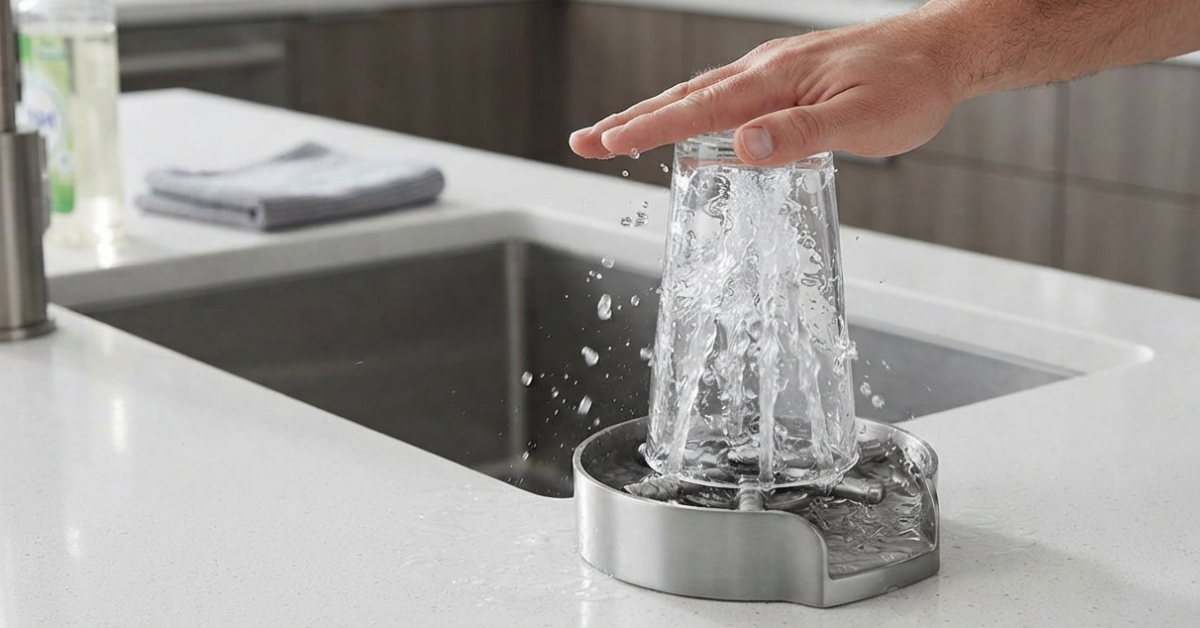
TL;DR: Installing a modern Kitchen Glass Rinser Benefitsr slashes glassware cleaning time from 45 seconds to just 3 seconds per item while cutting water consumption by up to 70%. Combined with ergonomic cabinet storage, this high-pressure sink attachment turns narrow, hard-to-clean vessels into a quick, one-handed task.
High-Pressure Glass Rinsers Boost Daily Sink Speed
A glass rinser uses inverted water jets to instantly clean narrow glasses, baby bottles, and blender jars that sponges can’t easily reach.
Glass Rinser Operation Workflow
===================================================
[ Inverted Vessel ]
▼
[ Stainless Steel Pressure Plate ]
▼
[ Automatic Water Valve Actuation ]
▼
[ Multi-Directional High-Pressure Spray Jets ]
▼
[ Instant 360-Degree Internal Flush & Draining ]
1. Ultra-Fast Cleaning Speed
Traditional manual washing requires lathering a sponge, squeezing it into a narrow vessel, rotating it repeatedly, and rinsing under an open tap.
- Manual Scrubbing: 30 to 60 seconds per glass.
- Glass Rinser Jet: 3 to 5 seconds per glass.
- Daily Time Saved: Up to 15–20 minutes per meal cleanup.
2. Targeted Water Conservation
Leaving the faucet running while scrubbing dishes wastes tens of liters of fresh water daily.
Glass rinsers use high-velocity micro-jets that concentrate water volume strictly inside the inverted cup.
The moment you lift the glass, the spring-loaded valve shuts off instantly, stopping water waste.
3. Reach Deep & Narrow Bottoms Easily
Baby bottles, tall champagne flutes, protein shakers, and narrow blender jars are notoriously difficult to clean by hand.
The multi-angle spray nozzles direct water into every corner, removing dried milk, whey powder, and tea residue without physical contact.
Standard Tap vs Glass Rinser: Speed & Efficiency
| Performance Factor | Standard Faucet Washing | Glass Rinser Attachment |
| Average Clean Time | 30–60 Seconds | 3–5 Seconds |
| Water Flow Profile | Continuous Low/Mid Pressure Stream | Targeted High-Pressure Micro-Jets |
| Physical Effort | Two-handed manual sponge scrubbing | One-handed press-down activation |
| Narrow Vessel Reach | Limited by sponge & hand size | Complete 360° internal coverage |
| Hygiene Level | Risk of sponge bacteria cross-contamination | Touchless high-velocity water wash |
Kitchen Cabinet Storage Solutions for Sink Zones
A high-performance sink setup works best when paired with well-planned cabinetry. Keeping cleaning supplies, extra glasses, and drying racks within arm’s reach ensures a smooth, clutter-free workflow.
Optimizing Under-Sink Cabinets for Plumbing & Storage
The space directly under the sink often becomes a messy storage spot for cleaning products. Utilizing specialized pull-out organizers keeps your sink area tidy while protecting your plumbing connections.
- Pull-Out Cleaning Caddy: Keep dish soaps, extra sponges, and Kitchen Glass Rinser Benefits on smooth sliding rails.
- Drip Tray Liners: Install waterproof PVC or aluminum mats to safeguard wooden cabinet bases against accidental leaks.
- Ventilation Louvers: Ensure under-sink cabinet doors have minor airflow slots to prevent moisture accumulation and mold growth.
When setting up your wash zone, integrating durable storage fittings like a dedicated multi-drawer basket keeps heavy cleaning supplies organized directly beneath the counter.
Organizing Glassware in Upper Modular Cabinets
Placing freshly Kitchen Glass Rinser Benefits into an organized upper cabinet prevents countertop clutter and reduces breakage risks.
- Adjustable Shelf Heights: Set shelf spacing based on your tallest glassware and travel mugs.
- Soft-Close Hinges: Prevent door slam vibration that can rattle delicate stemware inside the cabinet.
- Integrated Drip Racks: Mount wire drying racks inside upper cabinets above the sink area so excess water drains naturally into the basin.
Installing dedicated hardware solutions such as a glass plate rack with drip tray inside your upper cabinets lets you store freshly washed items safely without leaving water spots on counter surfaces.
Types of Kitchen Cabinets and Materials in Modern Homes
Selecting the right cabinet material ensures long-term resistance against water splashes, steam, and everyday wear near the sink zone.
Kitchen Cabinet Material Hierarchy
===================================================
├── Solid Hardwood & High-Grade Plywood
│ ├── Superior structural durability
│ └── Requires protective sealing against moisture
├── PVC & Acrylic Modular Cabinets
│ ├── 100% Water-proof & humidity resistant
│ └── Ideal for under-sink zones
└── Engineered MDF / Particle Board
├── Cost-effective for dry pantry zones
└── Requires edge-banding to prevent water swelling
1. Solid Wood & Engineered Plywood
High-grade marine plywood or treated hardwood provides maximum load capacity for heavy dishware.
When properly sealed with water-resistant polyurethane varnish, plywood cabinets offer exceptional protection against ambient kitchen moisture.
2. PVC & Polymer Cabinets
For under-Kitchen Glass Rinser Benefits subject to direct plumbing attachments and potential moisture exposure, PVC boards offer complete immunity to rot, water damage, and pest infestations.
3. Modular Cabinet Units
Prefabricated modular units allow home builders to configure custom wall layouts quickly.
They combine standardized drawer sizes with pull-out hardware for maximum space efficiency in compact city apartments.
4. Custom-Built Architectural Cabinetry
Custom woodwork accommodates unique kitchen layouts, structural wall columns, and tailored appliance cutouts, providing a seamless finish across the entire counter space.
Essential Cabinet Hardware That Boosts Kitchen Functionality
Cabinet doors and drawers rely on high-grade internal hardware to handle daily opening and closing without sagging or jamming.
Critical Cabinet Hardware Components
===================================================
[ Cabinet Frame ]
├── Soft-Close Hydraulic Hinges (Prevents door slamming)
├── Ball-Bearing Drawer Runners (Ensures smooth heavy load movement)
├── Pull-Out Wire Baskets (Maximizes deep cabinet accessibility)
└── Profile Handles & Latches (Protects door finish from grease)
Soft-Close Hinges & Dampeners
Soft-close hydraulic hinges slow cabinet doors before they contact the frame. This eliminates loud closing noises and protects cabinet frames from structural stress.
Full-Extension Drawer Runners
Ball-bearing drawer slides allow deep drawers to extend completely outside the cabinet frame. This gives full visual access to items stored at the back without reaching blindly
Corner Pull-Out Baskets & Carousels
Deep corner cabinets often become unused spaces. Installing revolving wire carousels or magic corner mechanisms brings stored pots and pans directly into view with a light pull.
For deep lower cabinets, integrating specialized internal fittings like a 2-layer side drawer basket maximizes vertical space for storing condiments, oil bottles, and cleaning agents cleanly.
Step-by-Step Installation Guide for Sink Glass Rinsers
Adding a glass rinser attachment to your existing sink setup is a straightforward DIY project that requires basic plumbing tools.
Glass Rinser Installation Steps
===================================================
Step 1: Shut off hot and cold water supply lines under the sink.
Step 2: Unplug or clear the existing soap dispenser accessory hole.
Step 3: Insert rinser shank through countertop hole with rubber gasket.
Step 4: Secure mounting nut and washer from beneath the countertop.
Step 5: Connect the T-splitter valve to the cold water supply line.
Step 6: Thread braided supply hose to T-splitter and rinser shank.
Step 7: Turn water supply on and test pressure plate actuation.
Step 1: Prep the Countertop Accessory Hole
Most modern stainless steel and granite sinks include pre-drilled 1.25 to 1.5-inch holes for soap dispensers or sprayer hoses.
Remove the existing plug or dispenser assembly to free up the mounting slot.
Step 2: Mount the Rinser Base and Shank
Position the rubber washer over the hole, insert the glass rinser shank downward through the opening, and align the drain spout toward the main sink basin.
Secure the mounting nut from underneath using an adjustable wrench.
Step 3: Connect Water Supply Line
Shut off cold water, thread T-splitter onto the angle valve, reconnect faucet hose to one outlet, and attach rinser hose to the other.
PRO TIP: Always apply Teflon plumber’s tape to exposed male threads before tightening metal hose connectors. This ensures a watertight seal and prevents pinhole leaks behind your cabinets.
Smart Kitchen Layout Trends for Modern Homes
Modern kitchen design emphasizes streamlined workflows that combine cooking, prepping, and cleaning into efficient, organized stations.
1. Integrated Wet and Dry Workstations
Separating wet washing zones from dry prep counters keeps water splashes contained around the sink basin.
Placing glass rinsers, pull-out trash bins, and dishwasher units within a 3-foot radius minimizes movement during cleanup.
To keep counter surfaces neat, homeowners often pair their sink setups with compact accessories like a spice bottle rack mounted on nearby backsplash rails.
2. Sleek Handleless Cabinet Styling
Minimalist handleless cabinets utilize recessed G-profile channels or touch-latch mechanisms. This creates flat outer surfaces that are easy to wipe clean after meal preparation.
3. Dedicated Appliance & Cleaning Bays
Concealing small appliances like blenders, coffee machines, and glass rinsers within dedicated counter bays reduces visual noise while keeping essential daily tools ready for immediate use.
Common Cabinet & Sink Accessory Mistakes to Avoid
- Choosing Low-Grade Particle Board Near Sinks: Installing moisture-sensitive particle board under sinks leads to cabinet swelling when small plumbing leaks occur.
- Ignoring Counter Top Clearance Hole Distances: Mounting a glass rinser too far from the sink edge prevents excess rinse water from draining into the basin properly.
- Overlooking Internal Drawer Load Limits: Loading standard drawer slides with heavy cast iron pans causes runners to bend and jam over time.
- Skipping Plumbing Pressure Checks: Running high-pressure glass rinsers on weak water lines reduces spray force, diminishing cleaning effectiveness.
- Neglecting Under-Sink Access: Blocking water shut-off valves with fixed wooden shelves makes emergency plumbing repairs difficult.
Final Thoughts
Upgrading your kitchen with a high-pressure glass rinser attachment transforms daily washing into a quick, effortless task.
When paired with high-quality cabinet storage solutions and durable hardware fittings, your sink area becomes an efficient workstation built for modern home living.
Next Steps & Resource Directories
Browse Full Directories
[Main Hub] > [Kitchen Sink Accessories]
Related Products
- Kitchen Drawer Basket Guide: Smart Storage Solutions
- Best Drawer Basket in Bangladesh for Smart Kitchens!
- Drawer Basket in Bangladesh: Prices, Trends & Buying Tips
- Drawer Basket: Ultimate 2026 Modular Kitchen Guide
