
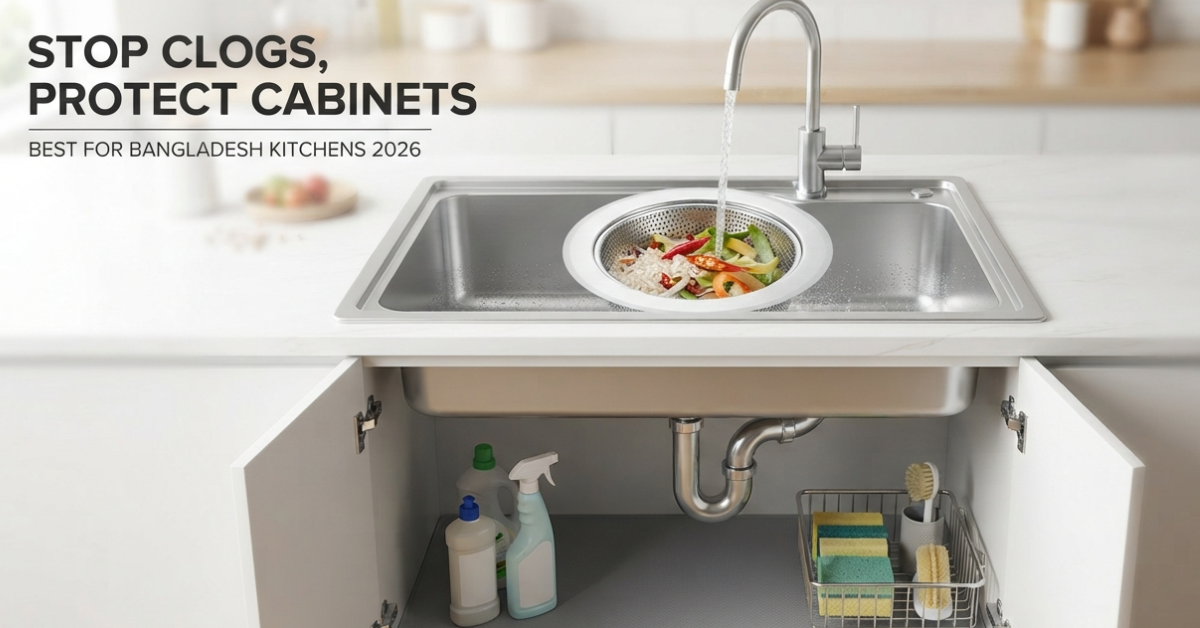
Preventing kitchen drain clogs and protecting under-sink cabinetry requires a high-performance sink drain protector that captures solid waste before it enters the plumbing trap. Modern Bangladeshi households, dealing with heavy starch, spice oils, and organic waste, rely on stainless steel mesh strainers to stop sudden blockages, maintain hygiene, and prevent water leakage damage.
Technical Anatomy of an Optimal Kitchen Sink Drain Protector
An effective kitchen sink drain protector serves as the primary barrier between your daily meal preparation and your home’s central drainage network.
Understanding the structural dynamics of drainage hardware ensures long-term plumbing efficiency and protects expensive under-sink cabinetry.
Core Engineering Requirements
A heavy-duty food waste drain catcher must balance rapid water evacuation with high-efficiency debris retention.
Low-grade strainers often overflow because their surface-to-hole ratio restricts water flow as soon as a small amount of waste accumulates.
+———————————————————————–+
| SINK STRAINER ANATOMY |
| |
| [ Wide Stainless Steel Rim ] —> Sits flush on sink basin flange |
| [ Micro-Perforated Mesh ] —> Holds 1mm+ organic particles |
| [ Recessed Debris Basket ] —> Directs water flow downwards |
| [ Solid Rubber Stopper ] —> Seals tight for basin filling |
+———————————————————————–+
- Perforation Size: Micro-holes (1.5–2mm) block food waste like rice while allowing soapy water to drain smoothly.
- Rim Geometry: A wide, flat stainless steel flange ensures a flush seal against the sink basin floor. Raised rims trap food waste along the outer edges, leading to bacteria buildup and slow drainage.
- Material Specification: Food-grade SUS304 stainless steel resists corrosion from acidic food residues, turmeric staining, and harsh cleaning chemicals used in modern kitchens.
Step-by-Step Installation & Sizing Guide for Standard Kitchen Sinks
Installing or replacing a sink drain strainer requires accurate measurements of your sink outlet to prevent bypass leaks and structural movement during heavy washing cycles.
- Measure the Sink Drain Opening
Use a caliper or metric tape measure across the inner diameter of the sink drain outlet. Standard Bangladeshi sink openings range between 3.5 inches (90mm) and 4.5 inches (114mm).
- Clear Existing Hardware and Reseam the Flange
Remove the old strainer assembly. Clean residual plumber putty or silicone sealant from the rim using a scraper and isopropyl alcohol to ensure a smooth, watertight seat.
- Insert the Strainer Basket Assem
- Place the primary stainless steel basket into the flange opening. Ensure the rubber gasket fits snugly underneath the sink basin floor before tightening the locknut from below.
- Test Evacuation and Seal Integrity
Fill the sink with 5 liters of water, deploy the drain stopper, and inspect underneath for moisture around the pipe threads. Release the stopper to verify rapid flow without splashing.
WARNING: Over-tightening under-sink locknuts can crack PVC drain tailpieces or warp thin stainless steel sink basins. Hand-tighten the lower ring first, then add a quarter turn with an adjustable wrench.
Integrated Drainage & Cabinet Protection Architecture
A kitchen sink drain protector does not work in isolation. It forms the upper shield of a comprehensive kitchen drainage and cabinet protection strategy.
KITCHEN DRAINAGE & CABINET INTEGRATION
│
┌──────────────────────────────────────┴──────────────────────────────────────┐
▼ ▼
Sink Basin Level Under-Cabinet Hardware
– Stainless Steel Drain Protector – Moisture-Proof PVC Substrates
– High-Flow Strainer Mesh – Hydraulic Soft-Close Hinges
– Removable Waste Basket – Waterproof Under-Sink Tray
│ │
└──────────────────────────────────────┬──────────────────────────────────────┘
▼
Protected Home Investment
When a sink drain clogs, water backs up into the basin and creates hydraulic pressure at pipe joints.
Over time, subtle drips saturate the floor of under-sink cabinets. Integrating a kitchen sink with a reliable strainer protects internal storage units, preventing timber warping, laminate peeling, and mold growth.
Evaluating Drain Protector cTypes for South Asian Cooking Styles
Different culinary habits generate distinct waste profiles. Bangladeshi cooking involves heavy oil, fine spice pastes, and dense organic debris, making specialized hardware selection essential.
| Strainer Type | Primary Material | Ideal For | Maintenance Frequency | Clog Prevention Rating |
| Micro-Perforated Basket | SUS304 Stainless Steel | Heavy daily cooking, rice & spice prep | Clean after every meal | High |
| Silicone Rim Mesh | Food-Grade Silicone + SS | Ceramic sinks & delicate glassware | Wash daily | Medium |
| Pop-Up Stopper Strainer | Brass Core + Chrome | Minimalist urban apartments | Bi-weekly deep clean | Medium-High |
| Over-Sink Colander Rack | Heavy Wire Stainless Steel | High-volume vegetable prep | Rinse after use | Low (Primary Catch Only) |
Micro-Perforated Stainless Steel Strainers
The ultimate choice for high-volume kitchens. The rigid stainless steel frame handles heavy impacts from cast iron pots and heavy pressure during scrubbing.
Silicone-Rim Hybrid Strainers
Silicone borders flex against non-standard sink rims to form a tight suction seal. They excel at dampening noise when handling heavy stainless cutlery.
Protecting Under-Sink Storage from Water Damage and Leakage
Preventing sink overflows is the first line of defense for kitchen cabinetry. When water backs up due to clogged drain traps, the resulting moisture damages under-sink organizational systems.
+———————————————————————–+
| UNDER-SINK PROTECTION CHECKLIST |
| |
| [ ] Install micro-mesh sink drain protector |
| [ ] Place waterproof tray underneath pipe junctions |
| [ ] Equip cabinets with anti-rust pull-out basket storage |
| [ ] Inspect trap bends monthly for grease accumulation |
+———————————————————————–+
Organizing under-sink space with heavy-duty storage fittings prevents pipe obstruction. Utilizing an elevator plain basket or installing a specialized 2 layer side drawer basket keeps cleaning supplies, detergent bottles, and spare drain accessories off the cabinet floor, maintaining airflow and enabling early leak detection.
Essential Cabinet Hardware for High-Humidity Kitchen Zones
Maintaining an efficient kitchen sink drain protector requires pairing preventative drainage accessories with rust-resistant cabinet internal fittings. Moisture from washing zones accelerates tarnish on low-grade hardware.
Corrosion-Resistant Pull-Out Storage
Under-sink and adjacent cabinet units require hardware coated to withstand humid conditions. Wire baskets allow ventilation, preventing damp odors from settling inside closed doors.
- Corner Storage Optimization: Utilizing a magic corner system maximizes blind cabinet spaces next to sink plumbing, turning unused areas into accessible storage
.
- Vertical Pantry Units: Installing a six layer tall unit basket keeps dry goods organized and away from wet wash zones.
Maintenance Protocols for Long-Term Clog Prevention
A sink drain strainer requires regular cleaning to maintain maximum flow rate and hygiene.
Accumulated grease and micro-food particles can form an organic film over strainer perforations.
Daily Maintenance Steps
- Empty Debris After Washing: Dump accumulated organic waste directly into the compost or trash bin after dishwashing cycles.
- Rinse with Hot Water: Flush the strainer basket with hot water to dissolve grease films and spice residues.
- Sanitize the Mesh: Scrub the inner and outer surface of the mesh using a stiff-bristled brush and dish soap to keep perforations open.
Deep Cleaning & Odor Eradication Protocol
- Remove the drain protector and soak it in a solution of equal parts warm water and white vinegar for 15 minutes.
- Sprinkle 2 tablespoons of baking soda down the exposed sink drain outlet, followed by 1 cup of hot vinegar.
- Allow the solution to fizz for 10 minutes to break down grease inside the P-trap.
- Flush the pipe with 2 liters of boiling water, then reinstall the clean strainer basket.
PRO TIP: Avoid using harsh chemical drain cleaners containing concentrated sulfuric acid or lye. These chemicals generate extreme heat, which warps thin PVC drain pipes, degrades rubber seals, and tarnishes stainless steel sink finishes.
Common sink drain protector Solutions
Improper use of sink strainers and under-sink maintenance can cause costly plumbing emergencies. Avoid these common pitfalls to keep your washing zone functional:
- Mistake: Using Strainers with Overly Large Holes
- Problem: Allows cooked rice, chili seeds, and fish scales to pass into the trap bend.
- Solution: Upgrade to a micro-perforated stainless steel strainer with hole diameters under 2mm.
- Mistake: Pouring Cooking Oil Down the Drain
- Problem: Oil solidifies inside cold drainage pipes, binding with trapped food particles to form solid blockages.
- Solution: Collect grease in a separate container for disposal, wiping oily pans with paper towels before washing.
- Mistake: Neglecting Under-Sink Visual Inspections
- Problem: Small, slow leaks go unnoticed until wooden cabinet bases swell and rot.
- Solution: Conduct a monthly check of all pipe couplings and under-sink storage fittings using a flashlight.
- Mistake: Forcing Debris Through the Strainer
- Problem: Pressing food particles through the mesh with fingers or utensils bypasses the strainer’s protective function.
- Solution: Tap the strainer gently against a trash bin to clear waste without damaging the mesh basket.
Modern Kitchen Design Trends in Bangladesh for 2026
Kitchen sink drain protector design in Bangladesh increasingly prioritizes functional ergonomics, seamless integration, and hygienic material selection.
As open-plan apartments become standard in Dhaka, Chittagong, and major urban centers, homeowners demand clean washing zones that prevent odors and visual clutter.
+———————————————————————–+
| MODERN KITCHEN DESIGN PRIORITIES |
| |
| [ Clean Aesthetic ] —> Undermount sinks with flush strainers |
| [ Space Efficiency] —> Integrated pull-out organizers |
| [ Material Quality] —> Anti-rust SUS304 hardware throughout |
+———————————————————————–+
A quality sink drain protector prevents plumbing clogs, protects cabinets, and keeps sinks clean
Next Steps & Resource Directories
Browse Full Directories
[Main Hub] > [Kitchen Sink & Accessories Category]
- Square Kitchen Sink: Best Styles, Sizes & Buying Guide
- Best Under Kitchen Sink Storage Ideas for Small Kitchens
- Top Mount Kitchen Sink Buying Guide for Modern Homes Today
- Stylish Modern modern kitchen sink design ideas for Homes
