
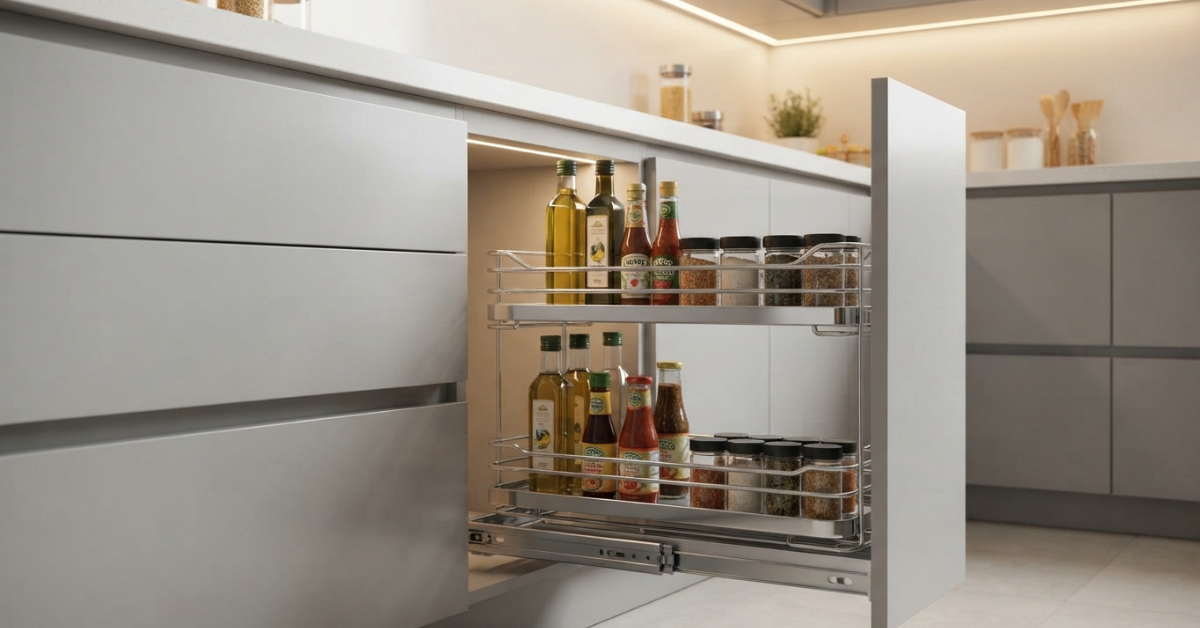
TL;DR: Upgrading your kitchen with a dedicated bottle organizer cabinet buying guide eliminates countertop clutter and prevents costly liquid spills.
By integrating heavy-duty telescopic runners, multi-tier wire racks, and moisture-resistant board materials, you turn tight, underutilized gaps into high-capacity storage zones. This comprehensive 2026 guide covers everything from hardware selection to layout customization for maximum kitchen efficiency.
Core Intent Resolution: Technical Breakdown of Ideal Bottle Cabinet Specifications
To maximize utility in compact kitchen layouts, a bottle organizer cabinet buying guide must balance weight capacity, dimensional fit, and smooth mechanical extension. Below is the technical breakdown required to engineer an optimal pull-out system.
1. Dimensional Metrics & Gap Optimization
- Standard Cabinet Widths: Typical bottle pull-out units range from 150 mm (6 inches) to 300 mm (12 inches) in total width.
- The 150 mm profile is ideal for narrow gaps alongside gas stoves, while 200–300 mm units accommodate larger oil jugs and multi-row spice layouts.
- Vertical Clearance: Ensure an internal height clear of at least 350 mm to 450 mm to store tall cooking wine, olive oil, and vinegar bottles without interference from upper shelving.
- Depth Requirements: Standard depth runs at 450 mm to 500 mm, fully utilizing deep base cabinets that are otherwise hard to reach.
2. Load-Bearing Hardware & Extension Mechanics
- Runner Type: Always select full-extension, bottom-mounted or side-mounted ball-bearing telescopic runners. Full extension ensures that bottles at the back are completely accessible.
- Soft-Close Dampening: Hydraulic soft-close mechanisms prevent the rack from slamming shut, keeping glass bottles from tipping over or clinking together violently.
- Weight Capacity Rating: Opt for hardware rated for at least 25 kg to 30 kg to support heavy glass containers and liquid volumes without sagging over time.
3. Material Resistance for Humid Environments
- Wire Racks: High-grade 304 stainless steel or electroplated chrome wire baskets resist rust caused by high humidity, salt exposure, and accidental liquid drips.
- Solid-Bottom Trays: ABS plastic or tempered glass bottom inserts prevent small spills from dripping down onto lower cabinet tiers or floor surfaces.
Why Quality Kitchen Cabinets Matter for Modern Homes
Smart storage in modern kitchens keeps essentials bottle organizer cabinet buying guide
frees up counter space, and cuts stress.
Quality cabinets organize clutter, protect glass, withstand heat, and boost home value long-term.
Types of Kitchen Cabinets Available in Bangladesh
Choosing the right cabinet material depends on your cooking style, budget, and resistance to environmental moisture.
Wooden Cabinets
Crafted from natural timber or solid board, these offer a timeless, classic look. They are extremely strong and structurally sound, making them ideal for traditional homes that favor a warm, organic aesthetic.
However, solid wood requires proper sealing to prevent swelling in humid climates.
PVC Cabinets
PVC boards are highly popular in moisture-prone zones because they offer 100% waterproof protection.
They are easy to wipe down, budget-friendly, and ideal for under-sink units or base cabinets near wet zones.
Modular Cabinets
Prefabricated modular units are designed for maximum space optimization. They fit seamlessly into modern apartments and allow easy installation of hardware like a 3 shelf pull out, wire baskets, and hidden drawers.
Custom-Built Cabinets
Tailored specifically to your kitchen’s exact dimensions, custom-built options allow you to customize every corner, shelf height, and internal hardware layout to suit unique floor plans.
Structural Comparison of Cabinet Materials
| Material Type | Best Application | Key Structural Advantage | Humidity Resistance | Maintenance Level |
| Solid Wood | Dry storage & overhead units | High load capacity & natural aesthetic | Low to Medium | High (Requires sealing) |
| PVC Board | Under-sink & wet zones | 100% waterproof & rot-proof | High | Very Low |
| HMR MDF | General modular cabinetry | Smooth finish & high screw-holding power | Medium to High | Low |
| Stainless Steel Frame | Heavy-duty base pull-outs | Anti-corrosive & industrial durability | High | Low |
Essential Hardware & Accessories for Functional Cabinets
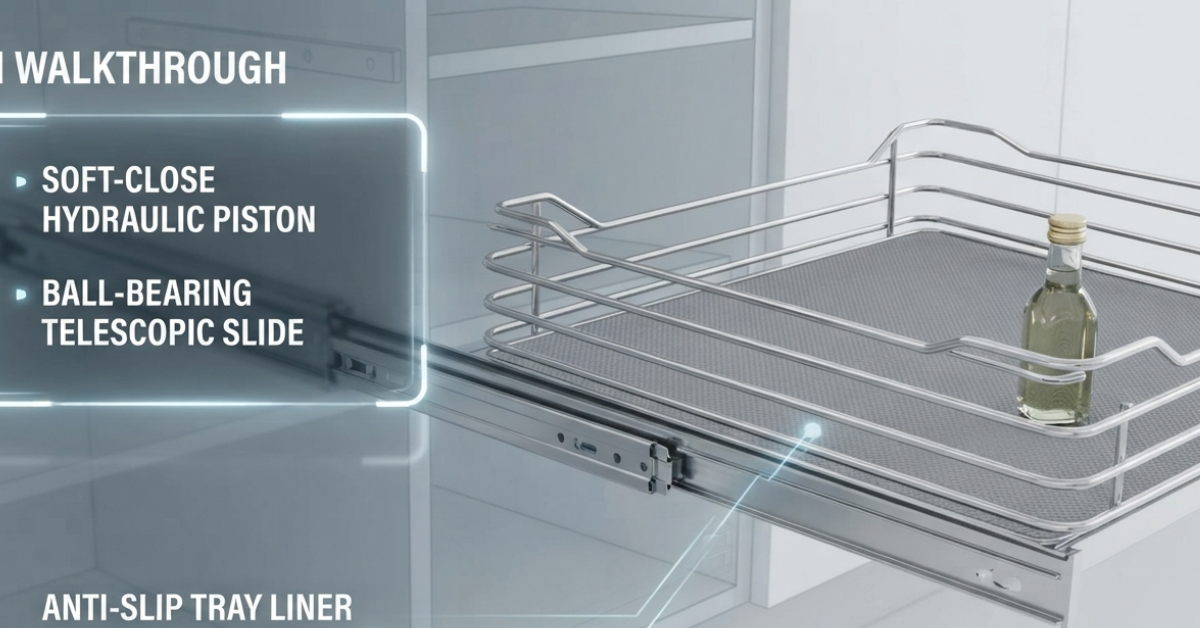
Internal hardware determines how smoothly and effortlessly your kitchen operates every single day. Without high-grade fittings, even expensive bottle organizer cabinet buying guide doors will underperform.
Hinges & Soft-Close Systems
Quality hinges prevent heavy doors from slamming shut, protecting cabinet frames from structural wear and tear.
Soft-close systems ensure smooth, silent movement even when doors are closed forcefully. Hydraulic stainless steel hinges are essential for resisting rust in humid kitchen settings.
Drawer Channels & Runners
Heavy-duty drawer channels carry the weight of heavy pots, pans, and full condiment bottles without sagging.
Ball-bearing telescopic runners allow drawers to extend fully, giving you complete visual access to items stored at the back.
Pull-Out Baskets & Organizers
Vertical pull-out racks turn narrow gap spaces into functional storage units.
Installing a dedicated 2 layer side drawer basket keeps oil jugs, vinegar bottles, and tall spice containers upright and locked in place, preventing tipping and spills while sliding in and out smoothly.
Cutlery & Internal Dividers
Internal tray dividers prevent small kitchen tools, spoons, and cooking utensils from turning into a chaotic pile.
Integrating a perfo cutlery basket separates knives, forks, and spice jars into neat rows, speeding up meal preparation and keeping countertops entirely clutter-free.
Handles & Finishing Hardware
Handles, knobs, and sleek profile pulls add the final touch to your kitchen overall design.
Opt for corrosion-resistant stainless steel, aluminum profiles, or brushed brass hardware that withstands daily grease, water exposure, and frequent touching.
Step-by-Step Installation & Measuring Guide
Proper measurement prevents installation failure when retrofitting bottle pull-out racks into existing or new cabinets.
- Measure Internal Frame Clearances: Measure the inside width, depth, and height of the cabinet opening. Always measure between the narrowest points, taking hinge projection into account.
- Account for Runner Clearance: Subtract 25 mm to 30 mm from total internal width to allow space for the side-mounted slide rails.
- Check Door Swing Clearance: Ensure adjacent cabinet doors or wall trim do not block the pull-out frame when pulled straight out.
- Mount Base Runners: Secure the bottom or side runner tracks to the cabinet casing using rust-resistant stainless steel screws. Ensure rails are perfectly parallel to prevent jamming.
- Attach Frame and Adjust: Mount the wire frame onto the runners, attach the front cabinet door panel using adjustable brackets, and fine-tune alignment using side adjustment screws.
How to Choose the Right Kitchen Cabinet for Your Space
Selecting the right setup requires balancing physical room dimensions with your cooking habits.
- Space Mapping: Start by measuring your available wall and floor space accurately, paying close attention to door clearance, gas pipeline locations, and electrical outlets.
- Layout Prioritization: If you have a compact apartment kitchen, prioritize tall modular units and narrow vertical pull-outs that maximize height over floor area.
- Budget Allocation: Plan your budget by allocating funds for both external casing materials and reliable internal hardware.
- Saving money on cheap hinges or weak runners often leads to quick wear and frustrating repairs.
- Maintenance Preference: Select finishes that match your lifestyle; matte and moisture-resistant surfaces are much easier to wipe clean after heavy daily cooking.
Solving Tight-Space Storage Challenges
In small city apartments, dead space around corners and appliances causes major storage friction.
Utilizing specialized corner organizers like a magic corner transforms deep, awkward blindly-built corners into active storage areas that slide out into full view.
When paired with narrow bottle pull-outs, these specialized hardware additions ensure that every cubic inch of your kitchen serves a functional purpose, eliminating dead zones entirely.
Kitchen Cabinet Design Trends in Bangladesh
Modern Bangladeshi kitchens are shifting toward clean, streamlined looks that emphasize function alongside minimalist style.
- Handleless Profiles: Flat-panel doors with integrated J-pull or G-profile aluminum channels are leading the trend, creating a seamless visual flow in smaller floor plans.
- Neutral Palette: Neutral tones—like warm whites, soft grays, beige, and deep slate—are widely favored for making compact rooms feel larger and brighter.
- Integrated Smart Storage: Homeowners are embracing modular layouts featuring smart storage integrations, such as pull-down upper racks, corner carousels, and slim slide-out spice drawers.
- Task Lighting: Combining hidden utility spaces with warm LED under-cabinet task lighting creates a contemporary aesthetic that looks elevated and stays effortless to use.
Common Mistakes to Avoid When Buying Kitchen Cabinets
Warning: Avoid using standard non-HMR particle boards near sink units or cooking hobs. High humidity and steam cause standard boards to expand and crumble within months.
- Buying Based Only on Price: Choosing cheap materials often results in swollen wood, warped doors, and broken runners within a short period due to moisture and heavy use.
- Ignoring Moisture Resistance: Standard boards near sink zones or gas stoves warp quickly; always choose water-resistant core materials for wet areas.
- Poor Measurement Planning: Failing to measure appliance dimensions, gas cylinder clearances, or door swing ranges can cause major installation headaches.
- Overloading Storage Capacity: Stuffed cabinets without internal racks lead to broken shelves and cluttered spaces where finding simple ingredients becomes difficult.
- Compromising on Hardware Quality: High-end cabinet panels will still feel frustrating to use if supported by cheap, non-branded hinges or rough drawer runners.
Maintenance & Cleaning Protocols for Kitchen Hardware
To ensure your bottle organizer cabinet operates smoothly for years, follow this simple maintenance schedule:
- Weekly Wipe Down: Wipe wire racks and bottom trays with a microfiber cloth dampened with warm water and mild dish soap to clear oil residues.
- Immediate Spill Care: Clean acid-heavy spills (like vinegar or lemon juice) immediately to prevent surface pitting on metal finishes.
- Quarterly Rail Lubrication: Apply a thin layer of food-grade silicone lubricant to the ball-bearing runner tracks to maintain silent, effortless glide dynamics.
- Bi-Annual Fastener Check: Tighten bracket screws connecting the front panel to the runner frame to prevent door alignment sagging.
Next Steps & Resource Directories
Browse Full Directories
Related Articles
- 3 Shelf Pull Out Storage Guide
- 2 Layer Side Drawer Basket Solutions
- Perfo Cutlery Basket Buying Guide
- Magic Corner Cabinet Optimization
