
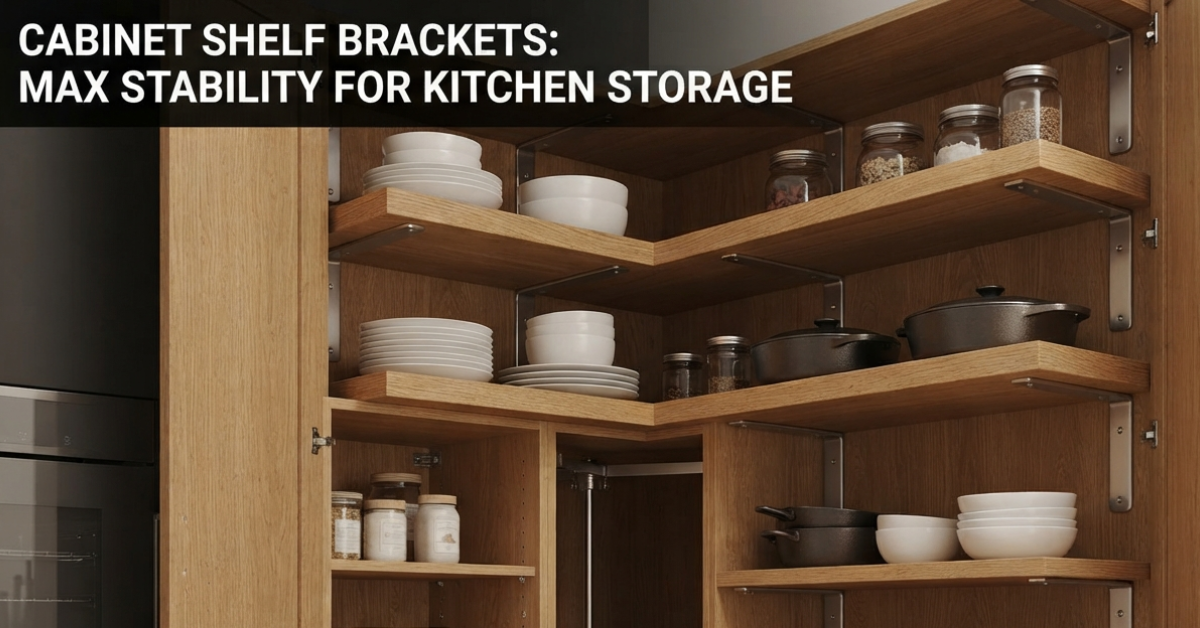
Choosing the right cabinet shelf brackets prevents sagging shelves, maximizes vertical storage, and keeps heavy kitchenware safe. Whether you are installing heavy-duty steel angle supports or adjustable pin pegs, matching your hardware to your cabinet material and expected weight load ensures long-term durability and effortless daily organization.
Match bracket type to load weight, shelf panel, and gap.
Selecting the ideal cabinet shelf brackets requires matching structural support types with your specific storage load, panel material, and room layout.
Using incorrect support hardware leads to bent pins, cracked cabinet side walls, and sagging shelves under daily kitchen use.
1. Heavy-Duty Steel L-Brackets & Angle Brackets
- Best For: Solid wood shelving, cast iron cookware storage, and high-load pantry units.
- Load Rating: Up to 150 lbs per pair (depending on wall/side panel anchor depth).
- Installation Strategy: Screw directly into solid wood frames or reinforced cabinet side walls using stainless steel wood screws.
2. Adjustable Metal Shelf Pegs & Clips
- Best For: Modular cabinets, lightweight upper shelves, and flexible pantry setups.
- Load Rating: 30 lbs to 60 lbs per set of four pins.
- Installation Strategy: Insert 5mm or 1/4-inch cylindrical pins into pre-drilled vertical peg hole tracks along the cabinet interior.
3. Concealed Floating Bracket Pins
- Best For: Modern open-concept shelving, aesthetic minimalism, and PVC cabinet panels.
- Load Rating: 40 lbs to 80 lbs depending on pin diameter and blind hole depth.
- Installation Strategy: Anchor backplate directly to cabinet walls and slide the hollow-core shelf over the extended metal rods.
Technical Comparison of Kitchen Cabinet Support Hardware
To select the right hardware for your custom or modular cabinets, evaluate load thresholds, panel compatibility, and installation complexity.
| Support Bracket Category | Ideal Cabinet Material | Standard Load Capacity (Set of 4) | Primary Installation Method | Adjustability Factor |
| Heavy-Duty Steel L-Brackets | Solid Wood / High-Density Board | 150+ lbs | Surface Screw Mounted | Fixed Position |
| Adjustable Cylindrical Pegs | Modular MDF / Plywood | 40 – 60 lbs | 5mm Pre-Drilled Hole Insert | Fully Adjustable |
| Concealed Blind Pins | Engineered Board / PVC | 50 – 80 lbs | Wall Anchor + Internal Core | Fixed Hidden Mount |
| Locking Plastic/Metal Clips | Light PVC / Laminated Board | 20 – 30 lbs | Snap-In Peg Track | Semi-Adjustable |
| Reinforced Corner Angle Brackets | Custom Joinery / Hardwood | 120 – 180 lbs | Corner Screw Flange | Fixed Position |
Step-by-Step Guide to Installing Heavy-Duty cabinet shelf brackets
Installing sturdy shelf supports ensures long-term safety and prevents catastrophic failures under heavy loads.
Step 1: Calculate Total Weight Requirements
Determine what items will rest on the shelf. Calculate the combined weight of heavy dinnerware, appliances, or cast iron pans.
Ensure your chosen hardware rating exceeds your total anticipated load by at least 25%.
Step 2: Mark Vertical and Horizontal Alignment Lines
Use a spirit level and tape measure to draw precise reference lines along the inner cabinet shelf brackets walls.
Even a 2mm misalignment can cause shelf instability, uneven weight distribution, and wobbling.
Step 3: Drill Pilot Holes or Peg Channels
When installing surface-mounted brackets, drill pilot holes using a drill bit slightly smaller than your mounting screws to prevent wood splitting.
For adjustable tracks, use a standard 5mm shelf pin jig to maintain consistent hole depth.
PRO TIP: When working with PVC or low-density board cabinet shelf brackets, use threaded screw inserts or steel reinforcement plates behind the mounting points to prevent screws from stripping under strain.
Step 4: Secure Hardware and Verify Load Balance
Fasten the brackets securely against the interior side panels. Place the shelf panel on top of the supports and check with a spirit level before loading heavy items.
Maximizing Vertical Space in Modern Urban Kitchens
Urban apartments in high-density regions require clever spatial engineering to make compact cookspaces feel open and functional.
Utilizing vertical wall height effectively transforms tight layouts into highly efficient workstations.
Integrating Modular Pull-Out Systems
Standard fixed shelving often creates dead space at the back of deep lower cabinet shelf brackets. Replacing static bottom shelves with smooth ball-bearing runners makes deep storage instantly accessible.
- Incorporate a 2-shelf pull-out inside narrow base units to store cooking oils and sauces neatly.
- Upgrade wider base cabinets using a heavy-duty plate basket to keep heavy dishware stable during daily drawer pulls.
Maximizing Corner Cabinets
L-shaped kitchens often suffer from inaccessible blind corners. Installing rotating basket systems ensures complete access to hidden spaces without awkward reaching.
- Utilize a 270-degree revolving basket inside corner cabinets to store pots and baking pans effortlessly.
- For tight 90-degree corner joints, integrate specialized pull-out trays that bring rear contents forward automatically when the door opens.
Critical Factors for High-Humidity Kitchen Environments
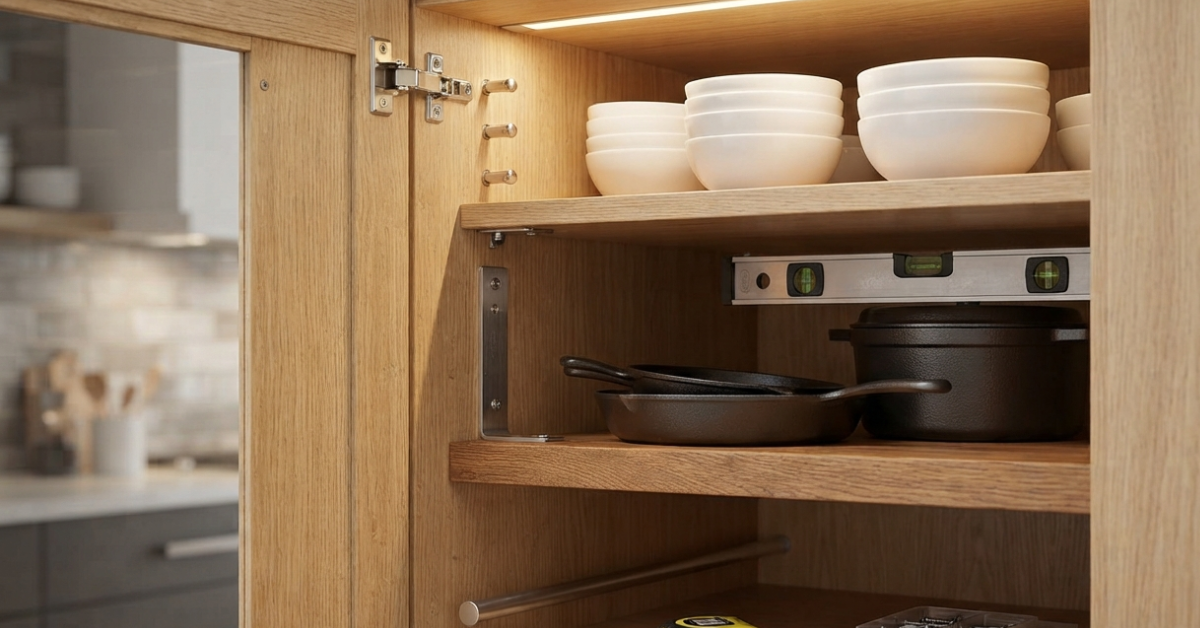
Kitchen environments subject interior cabinet shelf brackets hardware to steam, heat, and moisture daily. Selecting the wrong metal finish or board material leads to rapid corrosion, swollen panels, and structural failures.
Anti-Corrosion Finishes
Always choose brackets crafted from 304-grade stainless steel, chrome-plated steel, or powder-coated aluminum.
Uncoated iron hardware rusts quickly in warm, humid climates, staining your cabinet interiors.
Board Sealing and Water Resistance
Melamine or PVC-laminated panels protect underlying wood fibers from moisture absorption.
Ensure edge banding along all shelf cutouts is fully sealed before driving screws into internal panel edges.
Combine sturdy brackets with pull-outs for maximum space.
Complementing sturdy structural brackets with targeted internal organization accessories turns standard cabinets into high-performance culinary workstations.
Specialized Appliance and Cookware Support
Heavy kitchen appliances like rice cookers, food processors, and blenders require dedicated support structures.
Combining heavy-duty shelf brackets with dedicated holders keeps countertops clear.
- Install dedicated spice racks alongside an oil paper holder on interior cabinet shelf brackets doors to free up internal shelf space.
- Mount specialized metal racks beneath upper cabinets to keep everyday cooking items within arm’s reach during busy prep times.
+———————————————————————–+
| KITCHEN STORAGE LAYOUT |
+———————————————————————–+
| [ UPPER CABINETS ] |
| – Adjustable Steel Pegs + Sealed Laminate Shelves |
| – Mounted Under-Cabinet Accessories & Dish Racks |
+———————————————————————–+
| [ COUNTERTOP ZONE ] |
| – Clear Prep Area (Appliances Moved to Dedicated Shelf Storage) |
+———————————————————————–+
| [ LOWER BASE CABINETS ] |
| – Heavy-Duty Steel Angle Brackets for Heavy Cookware |
| – Stainless Steel Ball-Bearing Pull-Out Baskets |
+———————————————————————–+
Common cabinet shelf brackets Mistakes and Troubleshooting Fixes
Prevent common structural issues by avoiding these frequent cabinet design errors:
1. Overloading Thin Shelf Boards
- The Issue: Using 1/2-inch boards across a 36-inch span without center support leads to noticeable mid-shelf sagging.
- The Fix: Use 3/4-inch thick panels for shelf spans over 24 inches, or add a middle support bracket along the back wall stud.
2. Using Plastic Pegs for Heavy Loads
- The Issue: Plastic support pegs shear off under the weight of stacked ceramic plates or cast-iron skillets.
- The Fix: Replace stock plastic pins with solid steel cylindrical pins or heavy-duty steel angle brackets.
3. Ignoring Wall Stud Locations
- The Issue: Anchoring heavy-duty floating shelf brackets into hollow drywall leads to bracket detachment and wall damage.
- The Fix: Always anchor primary bracket screws directly into wall studs or use heavy-duty toggle bolts rated for high shear weight.
The Future of cabinet shelf brackets (2026 Trends)
Modern kitchen design trends continue to merge sleek minimalist aesthetics with high-load structural performance.
Hidden Structural Architecture
Homeowners are increasingly opting for concealed bracket systems that provide high load support without visible hardware, creating clean visual lines inside light-toned, handleless cabinets.
Integrated LED Channel Brackets
Modern shelf brackets now frequently feature built-in low-voltage LED channels.
These illuminated brackets light up dark lower cabinet shelf brackets interiors automatically when doors open, combining structural integrity with functional illumination.
Final Structural Recommendations
Selecting appropriate cabinet shelf brackets transforms kitchen storage functionality and ensures long-term cabinet durability.
Invest in heavy-duty stainless hardware for high-weight zones and match your bracket choices with smart interior accessories to maintain an organized, highly functional kitchen space.
Next Steps & Resource Directories
Browse Full Directories
[Main Hub] > [Kitchen Sink & Accessories Category]
- Square Kitchen Sink: Best Styles, Sizes & Buying Guide
- Best Under Kitchen Sink Storage Ideas for Small Kitchens
- Top Mount Kitchen Sink Buying Guide for Modern Homes Today
- Stylish Modern modern kitchen sink design ideas for Homes
