
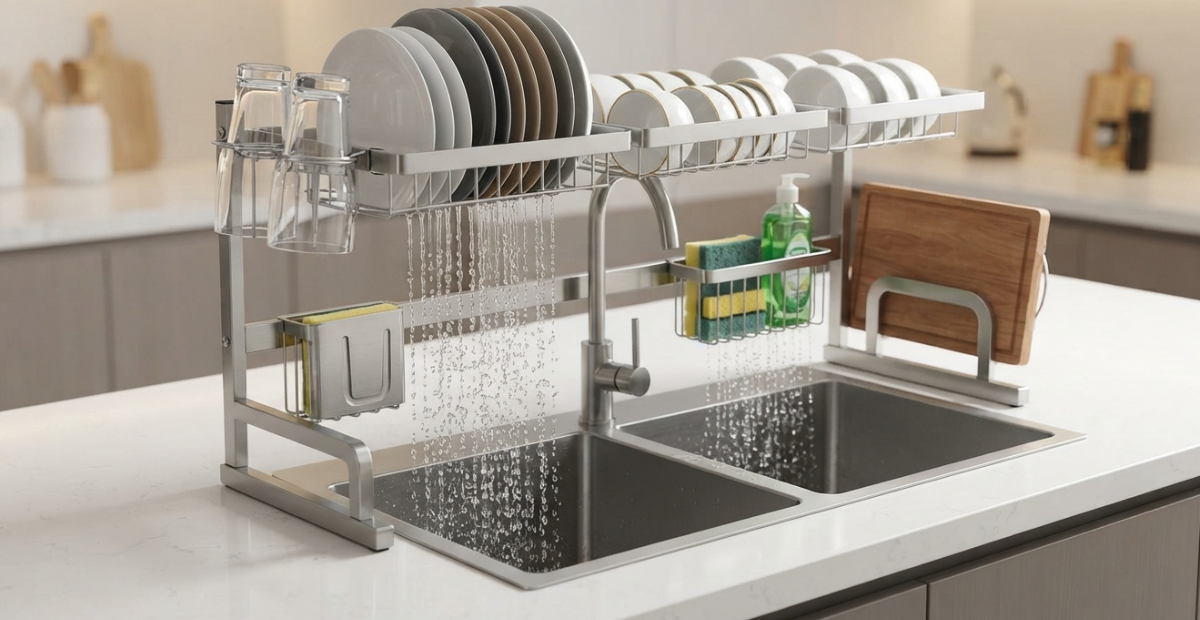
TL;DR: Transform your messy washing area into a peak-efficiency zone by choosing a high-grade, moisture-resistant dishwashing organizer that optimizes vertical sink space. Integrating premium modular kitchen accessories and heavy-duty smart kitchen hardware reduces cleanup times by up to 40% while actively preventing bacteria growth from pooled water.
The Ultimate Blueprint for Kitchen dishwashing organizer BD
Achieving structural order at the sink requires a systematic approach to balancing space constraints, water drainage, and tool accessibility. In typical urban apartments across Dhaka and Chittagong, the washing area is subjected to high-volume use three to four times a day, making workflow optimization absolutely critical.
[Sink Workspace Frame]
├── Vertical Zone ──► Over-the-Sink Multi-Tier Racks (Heavy items, Plates, Bowls)
├── Basin Perimeter ─► Integrated Sponge Caddies & Soap Dispensers
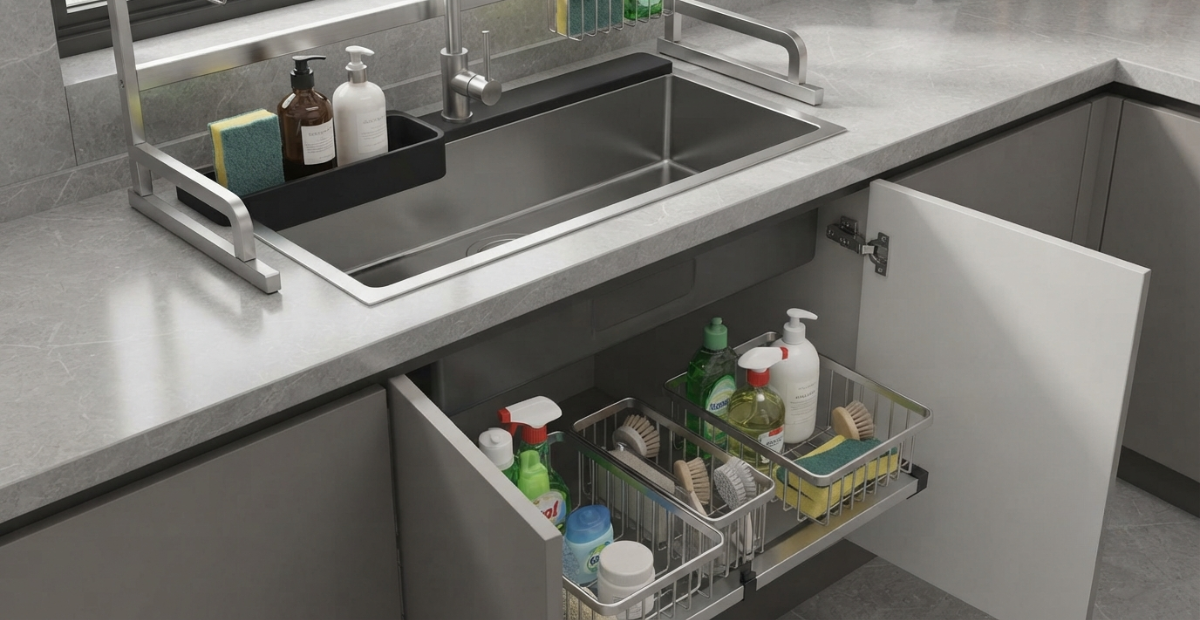
└── Base Cabinet ────► Pull-Out Bin Holders & Heavy-Duty Cleaning Chemical Trays
1. Vertical Space Optimization
Utilizing the under-utilized air space directly above your plumbing faucet allows you to clear valuable countertop surface areas. A premium vertical framework supports heavy tableware while keeping everything within arm’s reach.
2. Zoned Accessory Grouping
Keep items clustered by functional frequency. Daily washing liquids, scouring pads, and scrub brushes belong in a dedicated basin perimeter caddy, while bulk cleaning agents remain hidden below.
3. Integrated Micro-Drainage
Every element of your washing station must feature an engineered incline or a removable drip tray. Eliminating standing water prevents lime-scale accumulation and structural decay of adjacent fixtures.
Why Modern Kitchen Storage Solutions Define Workflow Efficiency
Upgrading your cleaning station is not merely about hiding clutter; it directly impacts your overall kitchen workflow efficiency. When tools are placed haphazardly around a basin, simple tasks like washing vegetables or scouring heavy pots require repetitive, wasteful movements. A strategic layout ensures a seamless transition from food preparation to final cleanup.
Traditional Layout: [Prep Zone] ──► [Messy Sink] ──► [Wet Countertop] (Chaos)
Optimized Workflow: [Prep Zone] ──► [Sink Station] ──► [Integrated dishwashing organizer] (Clean)
High-performing storage units dramatically lower daily stress by keeping drying plates stable and preventing structural damage to premium countertops. By integrating specialized plate dish rack systems directly adjacent to or over your basin, you construct a workflow that moves damp items smoothly without dripping dirty water across walkways.
Deep Dive: Material Engineering and Durability Standards
Investing in kitchen storage requires a strict understanding of materials due to the harsh, humid micro-climate surrounding domestic washing zones.
SUS304 Stainless Steel vs. Aluminum Architectural Frameworks
Premium setups rely exclusively on food-grade SUS304 Stainless Steel layered with anti-corrosive electroplated finishes to resist rust permanently. Aluminum components offer a lightweight alternative but lack the structural load capacity required to hold heavy clay pots, traditional iron woks, or substantial stoneware sets safely.
High-Impact ABS Plastic Accent Trays
For removable drip trays and structural cutlery cups, engineering-grade ABS plastic is preferred over cheap PVC options. This material resists cracks from accidental impacts, maintains color stability under direct sunlight, and tolerates hot water exposure without warping or leaching harmful compounds.
Load-Bearing Metrics and Deflection Resistance
A professional-grade over-the-sink dishwashing organizer must maintain its shape without center sagging when fully loaded to its 40kg capacity. Look for thickened square tubing profiles (minimum 20mm x 20mm cross-section) with double-bolt structural reinforcement nodes at the primary load joints.
Vertical Layout Feature Analysis: Finding Your Perfect Fit
| dishwashing organizerArchitecture | Ideal Kitchen Footprint | Maximum Load Limit | Primary Structural Benefit |
| Over-the-Sink Multi-Tier | Compact double-basin apartments | 45 kg | Zero countertop footprint; drains directly into sink |
| In-Sink Expandable Basket | Large single-basin luxury layouts | 15 kg | Completely hidden out of sight line; highly minimalist |
| Countertop Corner Station | L-shaped counter layouts | 25 kg | Converts dead corner space into active drying zones |
| Under-Sink Pull-Out Track | Base utility cabinets | 30 kg | Hides heavy detergents, brushes, and recycling bins |
Advanced Modular Kitchen Accessories for the Washing Zone
Enhancing your basin area involves looking beyond basic wire baskets to embrace advanced, task-specific innovations. Modern components are designed to interlock seamlessly, allowing homeowners to customize their setups based on their changing culinary habits.
Dual-Layer Slide-Out Infrastructure
For base cabinets directly underneath plumbing connections, utilizing an advanced 2 layer side drawer basket keeps plumbing valves fully accessible while gathering sponges, dish soaps, and towels into neat, pull-out compartments.
Space-Saving Wall-Mounted Systems
If your countertop space is completely occupied by appliances, heavy-duty wall grids can support hanging modular accessories. Suspending a dedicated glass plate rack with drip tray preserves structural counter space while accelerating glassware drying times via optimal ambient cross-ventilation.
Smart Kitchen Hardware: The Subsurface Foundation
The long-term performance of your organization system depends on the premium industrial components holding your kitchen cabinetry together. Without industrial-grade hinges, drawer channels, and supports, a heavy dishwashing organizer can cause structural failure in your woodwork.
Hydraulic Soft-Close Hinges
Moisture near the sink speeds up rust on cheap hardware, leading to sagging doors and misaligned cabinets. Installing heavy-duty, marine-grade hydraulic hinges ensures your doors close smoothly and seal tightly against ambient humidity.
Full-Extension Soft-Close Runners
When accessing sub-sink storage or pull-out trash systems, full-extension drawer channels allow heavy bins to slide out completely without tipping over. Look for synchronized tracking systems that damp the closing action during rapid, heavy use.
High-Load Structural Sink Supports
A modern, heavy-gauge undermount basin requires strong mechanical reinforcement. Installing adjustable sink support rack brackets transfers weight away from delicate granite or quartz edges directly down to the floor frame, protecting your stone countertops from cracking under heavy loads.
Step-by-Step Installation & Configuration Guide
Setting up your new organizational framework requires precision to maximize safety and long-term durability. Follow this systematic deployment plan to ensure absolute stability.
Step 1: Precision Clearance Survey
Measure the exact width of your sink basin, the height of your kitchen faucet from the countertop, and the clearance distance to any overhanging cabinets. Ensure your chosen utility rack provides at least 5cm of clearance around the faucet body to prevent operational interference.
Step 2: Foundation Leveling and Foot Deployment
Assemble the base structural frame using high-tensile hex bolts, leaving them slightly loose for final tuning. Position the unit across the sink workspace, adjust the threaded rubber suction feet until the horizontal support beams are perfectly level, then torque all fasteners tightly.
Step 3: Modular Component Balancing
Snap the individual accessory modules onto the primary crossbeams, alternating weight loads evenly between the left and right structural pillars. Place heavy plate slots directly over structural uprights, and position lighter sponge cradles near the center point.
Pro-Tips for Maintaining Long-Term Hygiene
- Weekly Thermal Sanitation: Wash your dishwashing organizer removable drip trays and cutlery holders with warm water once a week to kill bacteria and eliminate hard water stains.
- Preventing Surface Oxidation: Avoid using abrasive steel wool pads on stainless steel frames; instead, clean them with soft microfiber towels and mild dish soap
- Managing Microfiber Cloths: Never leave damp dishcloths folded over your faucet or bunched up in a corner. Always hang them flat across dedicated drying rails
Critical Pitfalls to Avoid in Sink Space Planning
Avoid purchasing universal storage units without checking their specific weight limits. Overloading a budget dishwashing organizer causes structural sagging, which can damage your countertops or drop delicate porcelain dishes.
Another frequent mistake is neglecting proper air ventilation behind the sink area. Shoving large drying racks deep into unventilated corners traps stagnant moisture against the wall, creating an ideal breeding ground for toxic mold and mildew.
Finally, do not overlook the build quality of internal drawer components. Standard wire baskets can corrode quickly when exposed to wet plumbing lines; choosing a high-grade perfo cutlery basket with precision perforations ensures clean drainage and keeps your flatware sanitary.
Future Trends: The Evolution of Smart Sink Spaces
Kitchen layouts are shifting toward highly integrated, industrial-grade washing stations. The traditional setup of a basic bowl sink with a standalone plastic dish rack is being replaced by unified workstation basins featuring built-in ledges, sliding prep boards, and integrated drying decks.
Tomorrow’s accessories will focus heavily on hands-free convenience, automated UV-C sterilization bins for sponges, and self-draining systems that redirect wastewater without manual effort. Incorporating premium modular hardware today prepares your kitchen to handle future lifestyle upgrades seamlessly.
Final Footer Block
Next Steps & Resource Directories
Browse Full Directories
Main Hub > Modular Kitchen Accessories
Related Articles
- Plate Dish Rack Selection Guide
- Maximizing Deep Under-Sink Base Cabinet Drawers
- Preventing Countertop Structural Cracks with Smart Supports
- Premium Anti-Bacterial Perforated Storage Alternatives
