
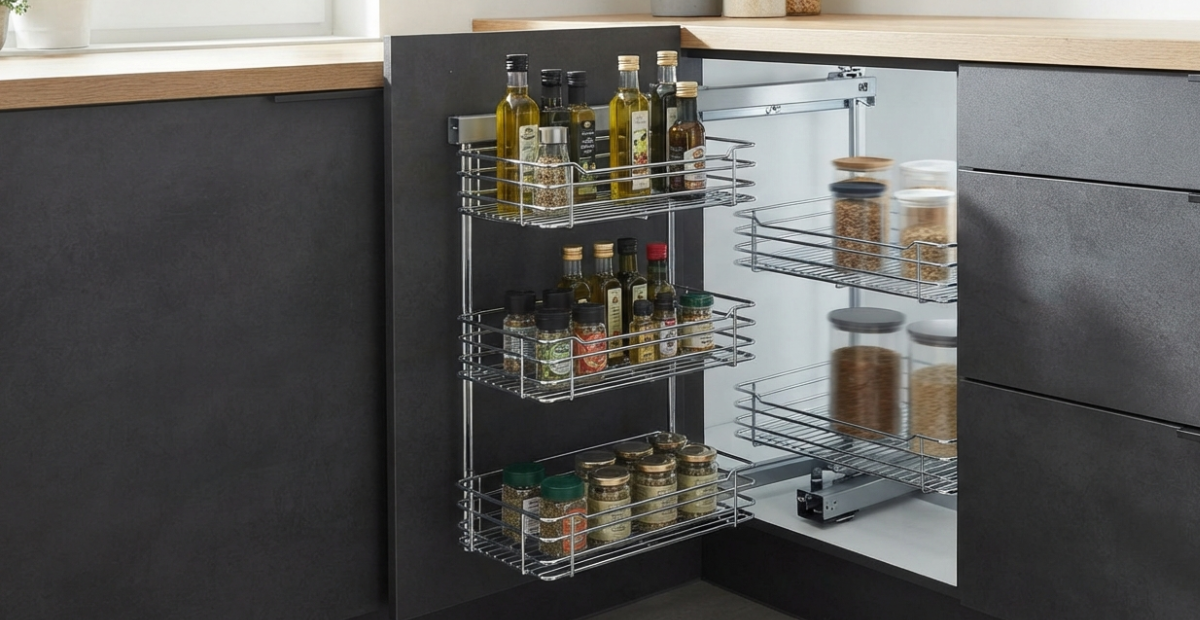
TL;DR: Upgrade cabinetry with pantry wire baskets and pull-out organizers to maximize space, clear out dark clutter corners, and optimize your kitchen.
Mastering the Pantry Wire Basket: Strategic Internal Organization
Replace deep, hidden cabinet shelves with pull-out wire baskets to easily access your groceries.
[Cabinet Frame]
└── [Heavy-Duty Tandem Slides]
└── [Stainless Steel Wire Basket] ──> Smooth Glide Access
To achieve optimal workflow efficiency, design your storage configuration using these functional vertical zones:
- The High-Frequency Zone (Eye Level): Dedicate this layout space to everyday essentials, frequently used cooking oils, and daily breakfast items.
- The Bulk Storage Zone (Lower Cabinets): Use heavy-duty wire systems to manage large rice containers, flour bags, and dense packages.
- The Vertical Larder Zone (Tall Units): Implement multi-tier vertical systems to consolidate a complete family grocery collection into one centralized space.
Structural Foundations: Selecting Your Kitchen Cabinets
Before you integrate advanced internal hardware components, you must establish a highly durable, moisture-resistant cabinetry foundation.
In urban apartments across Dhaka and Chittagong, homeowners typically select from four primary cabinet fabrication methods.
Wooden Cabinets
Solid wood offers a premium look and strong weight capacity, but Bangladesh’s heat and humidity require precise sealing to prevent warping.
PVC Cabinets
PVC cabinets are entirely waterproof, rustproof, and termite-resistant, making them a low-maintenance, durable choice for humid spaces.
Modular Cabinets
Modular kitchens feature standard dimensions that allow you to easily add pantry wire baskets and pull-out hardware without custom carpentry.
Custom-Built Options
Custom cabinets fit awkward kitchen corners perfectly but require precise planning for hardware.
Comprehensive Kitchen Cabinet Material and Hardware Comparison
To determine the ideal structural layout for an upcoming home renovation project, evaluate this comprehensive technical overview detailing materials and compatible hardware integrations:
| Cabinet Material / Hardware Type | Ideal Spatial Application | Primary Engineering Benefit | Structural Durability Class | Compatible Hardware Fitment |
| Solid Wood / Veneer | Large traditional homes | Luxurious, premium aesthetic | High (Requires moisture monitoring) | Heavy-duty under-mount runners |
| PVC (Polyvinyl Chloride) | High-humidity / Coastal areas | Completely waterproof & termite proof | Medium to High (Impact resilient) | Stainless steel soft-close hinges |
| Modular Melamine / HDF | Urban city apartments | Precision factory build, fast setup | High (When kept dry) | Standardized pull-out wire basket systems |
| Custom BWR Plywood | Irregular or unique layouts | Fully tailored to exact structural walls | High (Boiling water resistant) | Custom side-mounted tracking systems |
Essential Hardware and Accessories for High-Performance Kitchens
A beautiful cabinet exterior means very little if the internal operational components fail after a few months of intense daily use.
Managing heavy cookware, stone grinders, and extensive spice packages demands heavy-duty hardware parts. Focus your hardware investments on these five core areas to ensure long-term structural reliability.
Hinges and Hydraulic Soft-Close Systems
Standard cabinet doors frequently slam shut when handled quickly, leading to loud noise and accelerated structural wear along the frame joints.
Upgrading to hydraulic, soft-close hinges ensures that doors close smoothly and silently with a gentle push, preserving your structural cabinet frames for years to come.
Drawer Channels and Heavy-Duty Runners
Kitchen drawers frequently hold significant weight, including iron pans, heavy cast-iron pots, and large tableware sets. Installing commercial-grade tandem box systems or specialized under-mount drawer runners allows a fully loaded drawer to glide open effortlessly without sagging, sticking, or jumping off its tracking mechanisms.
Pull-Out Baskets and Corner Organizers
Deep lower corner cabinets quickly turn into dark, cluttered spaces where old items are forgotten.
Installing a specialized pull-out wire basket lets you pull the entire contents of a shelf out into the ambient room light, giving you instant, unhindered access to packages stored at the very back of your storage unit.
[Standard Deep Cabinet] ──> Blind Spot Clutter (Items Hidden)
[Pull-Out Wire Basket] ──> Full Expansion Track ──> 100% Visual Visibility
Integrated Cutlery and Internal Dividers
Organize tools with modular cutlery trays and spice holders to eliminate cooking clutter instantly.
Ergonomic Handles and Finishing Hardware
Cabinet handles act as design jewelry. From sleek G-profiles to brushed steel, premium hardware elevates style while resisting grease.
Professional Step-by-Step Guide: Choosing the Right Configuration
Selecting the ideal kitchen configuration involves balancing visual preferences, spatial restrictions, and long-term functional utility. Follow these five practical engineering steps when planning your new space layout:
1. Execute Multi-Point Spatial Measurements
Measure your kitchen twice. Precise framing ensures internal pull-out tracks slide smoothly.
2. Match Cabinet Style to Available Footprint
Small, narrow galley kitchens benefit immensely from streamlined modular layouts and vertical stainless steel larder unit configurations.
These specialized systems maximize vertical wall space without creating physical traffic bottlenecks on your floor.
3. Allocate Your Budget to Core Components
Budget smartly: prioritize durable core materials and high-use internal hardware over fancy finishes.
4. Verify Local Environmental Material Durability
Choose moisture-resistant boards or BWR plywood to withstand kitchen steam, heat, and water splashes.
5. Assess Long-Term Maintenance Needs
Matte finishes and textured laminates hide fingerprint smudges well, requiring far less wiping.
Kitchen Design Architecture Trends Transforming Urban Homes
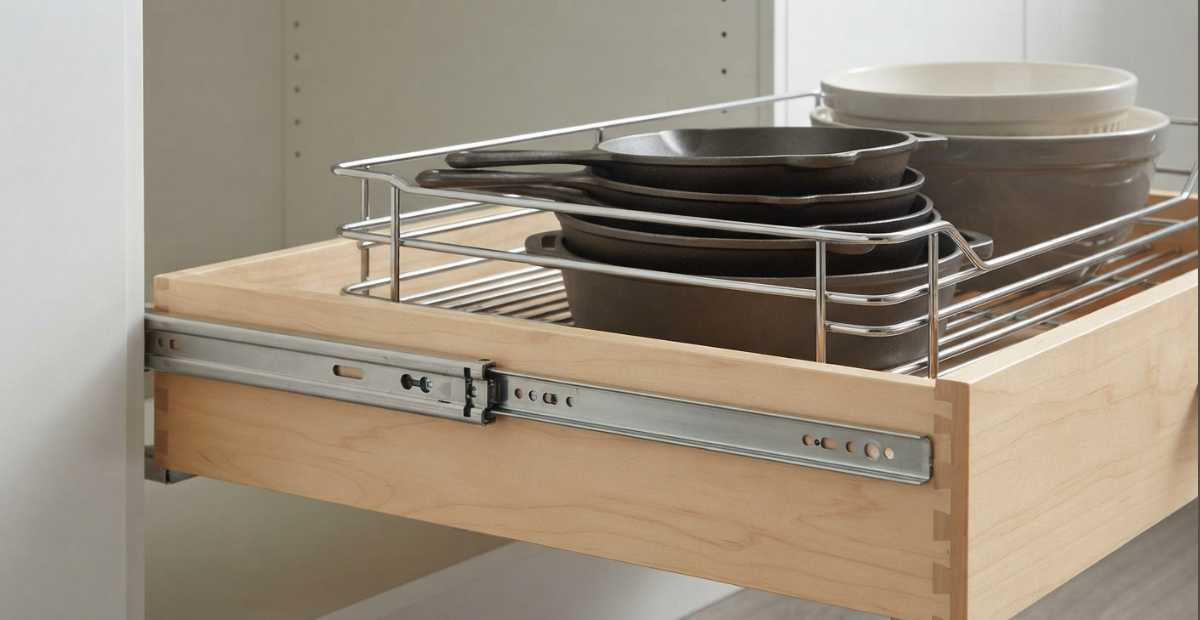
Kitchen architecture in modern apartments has transitioned from isolated, utilitarian cooking rooms into open-plan social hubs integrated with the main living space.
Modern layouts focus heavily on high spatial efficiency and understated elegance.
Minimalist Layout Aesthetics
Clean, handleless cabinet fronts featuring push-to-open doors or integrated J-pull profiles create a clutter-free, calming visual environment.
Keeping major appliances built-in preserves continuous, sleek design lines throughout the room.
Flexible Modular Configurations
Modular cabinets allow easy adaptation, letting you safely dismantle, alter, or relocate modules.
Balanced, Modern Finishes
Neutral tones like gray, beige, and charcoal with wood grains create a premium, modern kitchen vibe.
Intelligent Space-Saving Systems
From tall pull-out larder units to dynamic corner systems like a magic corner or a 270-degree revolving basket.
Modern hardware is engineered to utilize awkward, deep corner spaces that would otherwise go completely unused.
Dedicated Smart Storage Organization
Creating dedicated vertical storage zones featuring a multi-tier pantry wire basket keeps your weekly groceries neatly categorized, making it simple to track your food inventory and plan grocery shopping lists at a glance.
Pro Tip:Use the “Work Triangle” concept: arrange your stove, sink, and pantry in a triangle to optimize cooking flow.
Critical Mistakes to Avoid When Designing Kitchen Cabinets
Building or upgrading a kitchen is a significant long-term financial investment. To ensure you remain completely satisfied with your setup over time, avoid these five frequent design missteps:
- Choosing Hardware Based Solely on Lowest Price: Opting for low-end unbranded hardware or budget boards frequently results in sagging drawer bottoms, rusted hinges, and swollen doors within the first twelve months of use.
- Ignoring Local Moisture and Environmental Humidity: Standard interior boards can swell and lose structural integrity when exposed to constant humidity. Always ensure the cabinetry surrounding your sink and cooktop is built from water-resistant materials.
- Neglecting Component Clearance Tolerances: Failing to factor in the opening radius of your appliance doors or the precise clearance space required for internal pull-out wire baskets can lead to adjacent components knocking into each other.
- Overloading Rated Weight Capacities: Every drawer runner and wire basket has a designated load capacity limit. Overstuffing deep drawers with heavy stone tools or massive metal pots can warp the tracking rails over time.
- Compromising on Heavy-Use Cabinet Hardware: High-quality cabinets will only perform as well as the underlying hardware holding them together. Always prioritize commercial-grade hinges and runners to keep your space operating smoothly.
Strategic Storage Maximization: Utilizing Forgotten Corner Spaces
Deep corner cabinets often become useless dead zones. Modern hardware solves this with pull-out tracks that bring items right to you.
[Dead Corner Space] ──> Blind Reach (Inaccessible)
[Magic Corner Track] ──> Swing Out Action ──> Smooth Exterior Presentation
Multi-tiered corner carousels maximize deep cabinet space. A gentle pull swings the trays forward, giving you immediate access.
Next Steps & Resource Directories
Browse Full Directories
[Main Hub] > [Modular Kitchen Storage Solutions]
Related Articles
- Single Drawer Pull-Out Storage Solutions
- Six-Layer Tall Unit Larder Systems
- Premium Corner Magic Basket Organizers
- Four-Layer Modern Vertical Larder Baskets
