
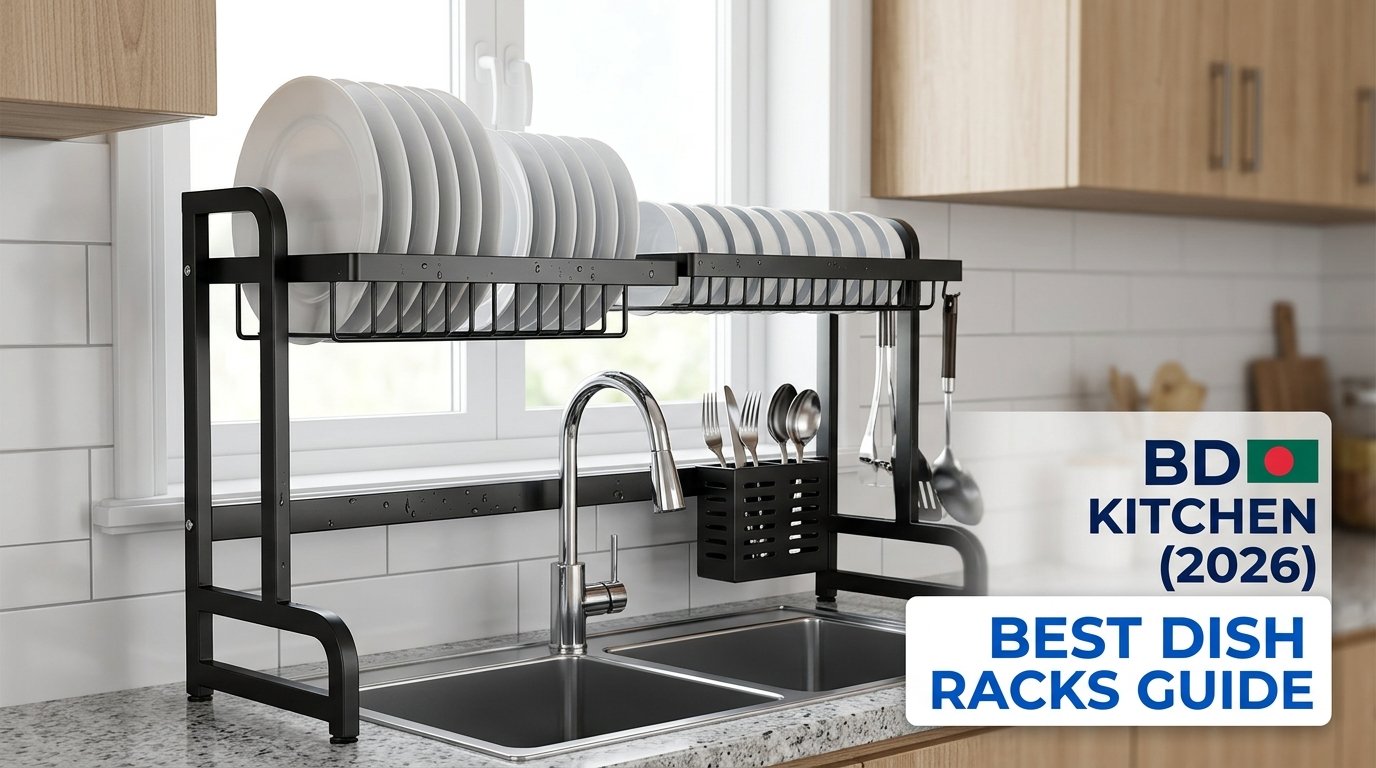
Installing a premium dish rack transforms a cramped washing area into a clean, dry, and highly efficient workstation. In modern Bangladeshi apartments, managing wet utensils, heavy traditional cookware, and daily cutlery without water pooling on granite countertops requires engineered vertical storage.
Selecting the correct load-bearing rack eliminates counter clutter, prevents rust stains, and optimizes every inch of available kitchen real estate.
Technical Comparison: Selecting the Right Dish Rack Setup
Choosing the optimal drying layout depends heavily on your kitchen footprint, wall structural integrity, and proximity to the main drainage outlet. The technical comparison below breaks down how each configuration performs under daily household demands in Bangladesh:
| Storage System | Ideal Kitchen Layout | Weight Capacity | Water Drainage Mechanism | Installation Complexity |
| Countertop Dish Drainer | Open counters with >2 feet sink side clearance | 15–20 kg | Integrated sloped tray directly into sink basin | Zero (Plug-and-play) |
| Over-the-Sink Rack | Compact apartments (Dhaka, Chattogram) | 25–35 kg | Direct vertical dripping into sink drain | Low (Telescopic frame adjustment) |
| Wall-Mounted Rack | Solid brick/concrete kitchen walls | 30–40 kg | Removable bottom drip trays | Medium (Wall anchor drilling) |
| In-Cabinet Pull-Out | Custom modular kitchen cabinetry | 20–30 kg | Stainless steel tray under wire frame | High (Internal rail alignment) |
Why Quality Kitchen Storage Matters for Modern Homes
Efficient space utilization is essential when designing a modern cooking area in urban apartments. High-quality organizational tools prevent clutter, speed up meal prep, and streamline post-cooking cleanup.
- Space Optimization: Vertical storage solutions clear up valuable counter space for prepping food, making room for prep bowls and daily appliances.
- Improved Organization: Designated slots for plates, bowls, and cutlery make finding daily essentials effortless.
- Better Cooking Workflow: Drying utensils right next to the sink keeps water off the floor and surrounding counters.
- Long-Term Durability: Sturdy materials prevent rusting, bending, or wobbling under the weight of heavy dishware.
- Property Value Improvement: A clean, well-equipped cooking space instantly enhances the aesthetic appeal of your home.
Types of Dish Racks Available in Bangladesh
Choosing the right structure depends on your counter space, sink layout, and daily utensil volume. Exploring different configurations helps you select a setup that fits your routines.
Countertop Dish Racks
Countertop models sit directly beside the sink to collect excess water. They are ideal for kitchens with ample counter area and require zero installation effort. Modern designs include sloped drainboards that route water straight into the sink basin.
Over-the-Sink Racks
An over-the-sink dish rack utilizes unused vertical space directly above your basin. Water drips straight into the drain, leaving surrounding surfaces completely dry. They work exceptionally well in compact apartments where counter area is limited.
Wall-Mounted Storage Racks
A wall-mounted dish rack frees up counter surfaces entirely by utilizing vertical wall space. Secured with heavy-duty brackets, these units safely hold heavy plates, glass cups, and daily cookery while giving your kitchen an open, uncluttered appearance.
Built-In Cabinet Dish Organizers
Built-in pull-out racks integrate directly inside your lower or upper cabinetry. They hide drying dishes behind sleek cabinet doors, keeping your counter completely clear while maintaining a minimalist interior aesthetic.
Material Engineering: Choosing Stainless Steel Over Plastic
Selecting the right material determines whether your rack lasts for decades or fails within months. In humid Bangladeshi coastal and metropolitan climates, raw steel and lower-grade alloys deteriorate rapidly due to water exposure and acidic spices.
Pro Tip for Homeowners: Always look for food-grade SUS304 or SUS316 stainless steel markings. Grade 201 steel may look identical when new, but it lacks sufficient nickel content and will show surface rust within six months of daily water exposure.
Stainless Steel (SUS304 vs. SUS201)
A premium stainless steel dish rack engineered from SUS304 alloy contains a minimum of 8% nickel and 18% chromium. This chemical composition creates an invisible chromium oxide layer that actively self-heals when scratched, providing 100% protection against rust, water spots, and heavy loading. Lower-tier SUS201 racks offer a budget-friendly price point but require immediate hand-drying to prevent oxidation pits over time.
Powder-Coated Carbon Steel
Powder-coated frames feature an electrostatically applied polymer coating baked under intense heat. This process produces a matte black or charcoal finish that resists chips, scratches, and water spots. It offers an industrial, modern look while protecting the underlying steel frame from rust.
High-Grade ABS Plastics & Polypropylene
Plastic dish drainers are lightweight and rustproof, making them popular for budget-friendly setups. However, plastic lacks the structural rigidity needed to hold heavy cast-iron kadais, metallic dekchis, or thick porcelain plates without sagging or yellowing over time.
Essential Hardware & Accessories for Functional Cabinets
A truly functional cooking space relies on heavy-duty internal hardware that can withstand daily wear and high moisture levels. Integrating specialized fittings elevates your kitchen’s overall efficiency.
Hinges & Soft-Close Systems
Soft-close hinges prevent cabinet doors from slamming shut, reducing noise and extending the lifespan of your cabinetry frames. High-grade stainless steel hinges remain rust-free even in humid conditions near the sink. Pairing your cabinet doors with a specialized glass plate rack with drip tray keeps your internal wood frames completely protected from lingering moisture.
Drawer Channels & Runners
Full-extension drawer channels allow easy access to items stored deep inside your cabinets. Smooth ball-bearing runners ensure heavy pots and stackable dishes slide out effortlessly without catching.
Pull-Out Baskets & Organizers
Pull-out wire baskets bring hard-to-reach items straight to you. Incorporating a dedicated 3 shelf pull out system alongside your main drying area keeps cooking oils, spices, and cleaning supplies neatly contained without taking up valuable counter space.
Cutlery & Internal Dividers
Internal tray dividers prevent spoons, forks, and knives from mixing together inside drawers. Installing a high-grade cutlery basket allows small silver utensils and chopsticks to dry rapidly through organized ventilation slots.
Handles & Finishing Hardware
Sleek cabinet handles and concealed profile pulls complete your room’s aesthetic. Corrosion-resistant metallic finishes maintain their shine despite frequent touch and moisture exposure.
How to Choose the Right Dish Rack for Your Space
Selecting the right unit requires balancing size, load capacity, and daily maintenance needs.
- Measuring Correctly: Measure the height, depth, and clearance above your sink—especially if upper cabinets hang above the washing area.
- Matching Design to Kitchen Size: Compact single-tier models suit smaller households, while multi-tier vertical units accommodate larger family cooking demands.
- Budget Planning: Balance upfront costs with long-term material quality to ensure your accessory withstands daily water contact.
- Material Durability: Look for food-grade stainless steel options with rust-resistant coatings to handle constant moisture exposure.
- Maintenance Needs: Choose removable drip trays and utensil holders that can be detached easily for periodic deep cleaning.
Installation & Mounting Guide: Over-the-Sink vs. Wall-Mounted
Achieving structural stability is critical when mounting loaded storage units above water sources and delicate countertops. Follow these step-by-step structural guidelines for safe installation:
Installing an Over-the-Sink Rack
- Faucet Clearance Check: Measure the height from your sink rim to the top of your faucet spout. Ensure the bottom basket of your over-the-sink dish rack clears the faucet by at least 4 to 6 inches.
- Width Alignment: Adjust the telescopic horizontal support bars so the outer vertical legs rest firmly on stable countertop edges on either side of the sink basin.
- Level Adjustment: Tighten the rubber leveling feet beneath each leg to ensure the frame does not wobble on tiled surfaces.
Mounting a Wall-Mounted System
- Wall Integrity Assessment: Ensure the wall behind your sink consists of solid brick, concrete, or reinforced concrete blocks. Avoid mounting heavy load-bearing racks directly onto thin, unreinforced drywall or hollow PVC panels.
- Anchor Placement: Mark drilling points using a spirit level. Drill pilot holes into the wall tiles using a specialized diamond-tipped drill bit to prevent tile cracking.
- Heavy-Duty Fastening: Insert expandable steel rawl plugs into the pilot holes. Drive heavy-duty stainless steel mounting screws through the rack brackets into the plugs until fully flush.
- Load Testing: Before stacking heavy clay vessels or ceramic dishware, apply gradual downward hand pressure to verify that the brackets show zero deflection.
Comprehensive Maintenance Protocol: Preventing Rust and Limescale
Even a high-grade countertop dish drainer accumulates hard water deposits, soapy residue, and limescale over time due to mineral concentrations in urban water supplies. Maintaining a routine cleaning schedule keeps your stainless steel bright and hygienic.
Warning: Never use industrial hydrochloric acid, strong bleach, or steel wool pads on stainless steel racks. Harsh chemicals destroy the passivated chromium oxide layer, causing severe surface pitting and rust spots within weeks.
Weekly Maintenance Routine
- Remove Drip Trays: Slide out the removable plastic or stainless drip trays and drain standing water into the sink.
- Wipe Wire Spindles: Wash down wire racks using a soft microfiber cloth soaked in warm water and mild dishwashing liquid.
- Sanitize Utensil Cages: Detach the hanging cutlery holders and scrub the bottom drainage holes with a small bottle brush to clear organic debris.
Monthly Deep Cleaning (Removing Limescale & Hard Water Stains)
- Prepare Natural Cleaning Solution: Mix equal parts white vinegar and warm water in a spray bottle.
- Spray and Soak: Spray the solution liberally over white mineral crusts and limescale buildup on the rack frame and drip tray. Allow the solution to sit for 10 to 15 minutes to dissolve calcium carbonate deposits.
- Scrub and Rinse: Gently scrub the affected joints using a soft nylon bristle brush. Rinse thoroughly with clean tap water and dry completely with a clean towel.
Kitchen Organization Bangladesh: Ergonomic Workflow Integration
Creating an efficient cooking environment requires treating your drying rack as an integral component of your entire culinary workspace. Strategic layout positioning transforms routine meal prep and cleanup into a seamless process.
Optimizing the Washing Zone
Place your drying unit within an arm’s length (18 to 24 inches) of your primary washing sink. This minimizes water dripping across the kitchen floor when moving wet pots and pans out of the basin. Pairing your sink area with a heavy-duty plate dish rack creates a dedicated drying zone that keeps your main counter space clear for food prep.
Integrating Secondary Storage Accessories
To maintain a clean, organized kitchen, combine your primary dish drying setup with specialized storage accessories:
- Wall-Mounted Spice Rails: Keep daily condiments and cooking oil bottles elevated off counter surfaces by pairing your setup with a dedicated spice paper rack.
- Hanging Hook Arrays: Mount double-S hooks along lower rack bars to hang ladles, spatulas, strainers, and oven mitts directly above the sink.
- Corner Utilization: Fill empty corner counters with multi-tier corner baskets to store cleaning sponges and dishwashing liquids out of sight.
Kitchen Accessory Trends in Bangladesh
Modern homes are moving away from basic plastic drainers toward durable, stylish metal storage solutions.
- Minimalist Layouts: Sleek matte black and brushed chrome finishes match contemporary interior designs.
- Multi-Tier Vertical Storage: Stacking plate holders and bowl tiers vertically doubles drying capacity without wasting space.
- Neutral and Modern Finishes: Corrosion-resistant powder coatings provide clean, modern visuals that resist water spotting.
- Space-Saving Innovations: Modular attachments—like clip-on cutting board holders and knife slots—maximize functionality.
- Smart Storage Integration: Combining wall-mounted rails with internal cabinet organizers creates a seamless, clutter-free environment.
Common Mistakes to Avoid When Buying Storage Racks
Avoiding critical buying errors ensures your kitchen accessories serve your household effectively for years to come.
- Choosing Based Only on Price: Extremely cheap metal alloys rust within months when exposed to constant water contact.
- Ignoring Moisture Resistance: Selecting non-treated materials leads to rust stains on countertops and sanitized utensils.
- Poor Measurement Planning: Buying an over-the-sink dish rack without checking faucet height or cabinet clearance often prevents proper fitting.
- Overloading Storage Capacity: Piling heavy pots onto lightweight frames can warp wire trays and cause stability issues.
- Compromising on Hardware Quality: Using weak mounting anchors for wall units risks damaging both wall tiles and your glassware.
Choosing the right kitchen cabinet and hardware solutions can transform both the appearance and functionality of your kitchen. Investing in quality materials and smart storage ensures long-term convenience and better daily use. Explore modern storage solutions with KitchenLink to elevate your cooking space today.
