
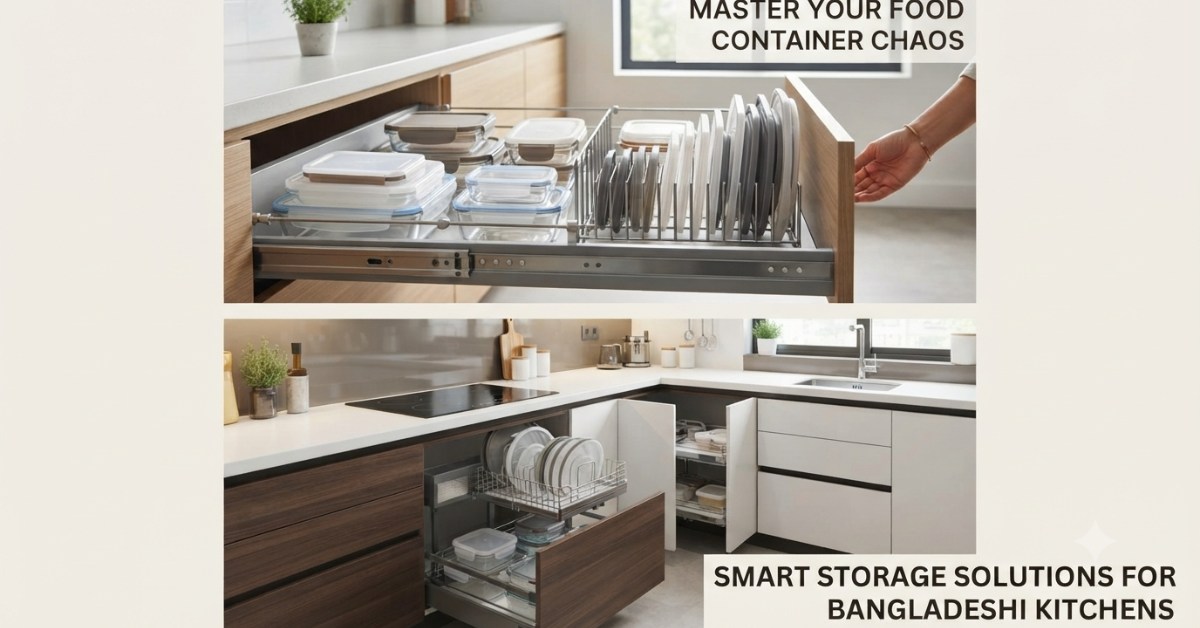
TL;DR: Managing plasticware clutter in modern urban kitchens requires shifting from basic shelving to targeted food container organizer systems.
By integrating high-extension pull-out baskets, vertical lid dividers, and moisture-resistant cabinetry hardware, you can maximize deep cabinet volume, streamline daily meal preparation, and prevent container clutter permanently.
Core Solution: Building a Zero-Clutter Food Container System
Resolving food storage chaos demands structure, not surface cleanup—smart drawer layout is key.
To build an optimized storage zone, food container organizer your lower cabinetry around container geometry, accessibility, and material type:
- Dedicate Lower Deep Drawers for Base Tubs:Use deep base drawers for main containers. Nesting by shape stops clutter on counter surfaces.
- Implement Vertical Partitioning for Lids:Storing lids attached wastes 60% space. Use vertical pull-out baskets to keep them visible.
- Separate Glass and Plasticware Zones: Store glass in reinforced soft-close lower drawers. Keep plasticware in upper wire baskets.
Why Quality Kitchen Cabinets Matter for Modern Homes
Quality cabinets maximize vertical space in small kitchens, streamline daily cooking, and protect against humidity to add long-term home value. (
+———————————————————————–+
| EFFICIENT KITCHEN WORKFLOW |
+———————————————————————–+
| |
| [ PREP ZONE ] —> [ COOK ZONE ] —> [ CLEAN ZONE ] |
| Countertops, Gas Stoves, Sinks, |
| Food Container Ovens & Range Trash Pull-outs |
| Organizers & Baskets Hoods & Dish Racks |
| |
+———————————————————————–+
Types of Kitchen Cabinets Available in Bangladesh
Choosing the correct cabinet structure determines your kitchen’s overall durability, load capacity, and routine maintenance requirements.
Homeowners across Bangladesh generally select from four primary cabinet materials to suit their lifestyle, cooking habits, and structural budgets:
Plywood & Wood Veneer Cabinets
Traditional and highly durable, marine-grade plywood wrapped in natural wood veneer offers a classic, premium aesthetic.
Plywood features exceptional screw-holding capacity, making it ideal for supporting heavy stone countertops, solid iron cookware, and fully loaded pantry shelves.
PVC & High-Density Board Cabinets
A budget-friendly option that provides 100% moisture resistance.
Synthetic PVC boards do not absorb ambient humidity, making them exceptionally suitable for under-sink wet zones, dishwashing areas, and coastal environments prone to dampness.
Modular Steel & Board Units
Pre-engineered modular systems designed specifically for modern high-rise apartment layouts.
These units feature powder-coated steel frames paired with engineered board fronts, allowing rapid job-site installation, easy panel replacement, and flexible repositioning during renovations.
Custom-Built Architectural Cabinetry
Tailored specifically to non-standard kitchen footprints, custom cabinetry accommodates structural concrete pillars, awkwardly placed gas pipelines, and deep alcoves.
Custom builds allow seamless integration of specialized pull-out hardware and tailored storage accessories.
Essential Hardware & Accessories for Functional Cabinets
A cabinet frame is only as reliable as the mechanical hardware mounted inside it.
Installing high-quality internal fittings transforms standard wooden boxes into high-capacity, ergonomic storage hubs.
Hinges & Soft-Close Systems
Modern cabinet doors rely on hydraulic soft-close hinges to absorb mechanical shock and eliminate slamming noises.
These hydraulic mechanisms reduce physical stress on door frames, protect exterior laminate finishes from impact cracking, and maintain a quiet home environment during peak cooking hours.
Drawer Channels & Heavy-Duty Runners
Heavy-duty ball-bearing runner systems ensure deep cabinet drawers glide smoothly even when loaded with heavy glassware or cast-iron pots.
Full-extension undermount slides offer complete visual and physical access to the back corners of deep drawers, eliminating blind reaching.
Pull-Out Baskets & Container Racks
Stainless steel pull-out wire baskets convert deep, dark cabinet voids into easily accessible sliding shelves.
Utilizing an integrated container storage rack inside these pull-outs ensures plastic lids and base tubs remain segregated, permanently preventing internal cabinet clutter.
+———————————————————————–+
| PULL-OUT BASKET ORGANIZER |
+———————————————————————–+
| |
| +————————–+ +———————————-+ |
| | LID SECTION | | CONTAINER BASE SECTION | |
| | Vertical slot divider | | Nested glass & plastic tubs | |
| | keeps lids upright | | sorted by shape & volume | |
| +————————–+ +———————————-+ |
| |
| ===================== FULL-EXTENSION RUNNERS ==================== |
| |
+———————————————————————–+
Cutlery & Internal Partition Dividers
Custom tray inserts prevent small utensils, spice containers, and storage accessories from shifting during drawer operation. Adjustable internal partitions enable home cooks to modify drawer layouts as their collection of kitchen tools evolves.
Handles & Architectural Finishing Hardware
Handles, concealed profile pulls, and tactile knobs provide necessary functional leverage while adding architectural style.
Selecting rust-resistant 304-grade stainless steel, solid brass, or anodized aluminum hardware prevents surface corrosion caused by kitchen steam, cooking oils, and daily humidity.
Architectural Layout Comparison: Cabinet Materials
| Material Type | Primary Application | Key Operational Benefit | Moisture Resistance | Structural Durability |
| Marine Plywood | Heavy cookware & main frames | High screw retention & load strength | Moderate (When Sealed) | Exceptional |
| PVC Board | Under-sink & damp zones | Imperial water resistance & zero rot | High | Medium |
| Modular Steel Frame | Rental units & modern apartments | Fast installation & structural flexibility | High | High |
| Engineered MDF/HDF | Dry wall cabinets & decorative doors | Smooth finish for lacquer paints | Low | Medium |
How to Choose the Right Kitchen Cabinet for Your Space
Selecting cabinet units requires balancing floor plan dimensions against household storage volume.
Always measure floor-to-ceiling clear heights, wall boundaries, and appliance clearances before purchasing modular fittings.
Pro Tip: When planning lower cabinet depth, allocate at least 22 inches of internal clear depth to accommodate standard full-extension drawer runners and multi-tier wire food container organizer seamlessly.
Small kitchens need tall larders. Large ones fit islands. Invest in durable hardware.
Specialized food container organizer Storage Solutions
Beyond general cabinetry, specific food container organizer configurations address common kitchen pain points.
Choosing target hardware accessories ensures every type of container stays secure and accessible:
- Deep Drawer Nesting Stations:Drawer pegboards use movable pegs to hold nested containers in place when pulling drawers.
- Corner Cabinet Carousels:Magic corners and revolving trays turn dead blind-corner space into easy-access storage.
- Over-the-Door Wire Racks: Mount slim door wire racks to store flat lids and wraps without taking up cabinet shelf space.
Step-by-Step Guide: food container organizer Cabinet
Reclaiming control over an unruly container cabinet requires a systematic approach. Follow this procedural workflow to establish a lasting, self-maintaining storage system:
- Complete Cabinet Evacuation: Remove every container, lid, and tray from your existing cabinetry. Clean internal shelf surfaces with a moisture-neutral disinfectant spray.
- Purge Unmatched Components:Pair bases with lids. Throw out warped plastic and lidless tubs immediately to clear space.
- Categorize by Material and Frequency: Group items by use: daily glass lunchboxes, meal prep tubs, condiment pots, and grain jars.
- Install Structural Dividers: Put vertical dividers in drawers. Keep daily containers in front and bulk items in the back.
- Implement Nesting Rules: Nest base containers by geometric shape (limit stacks to 3–4 units high to prevent tipping). Place lids vertically in adjacent wire slots sorted by size.
Kitchen Cabinet Design Trends in Bangladesh
Modern residential interiors across Dhaka, Chattogram, and Sylhet are shifting toward clean, highly functional architectural layouts:
- Handleless Profile Cabinets: Minimalist door fronts featuring integrated J-pull channels or push-to-open touch latches create unbroken horizontal lines.
- Two-Tone Color Palettes: Light, light-reflecting upper cabinets paired with darker, stain-concealing lower drawers add visual contrast while maintaining a sense of openness.
- Integrated Hardware Systems: Built-in waste pull-outs, concealed spice racks, and full-height pull-out pantries hidden behind unified cabinet fronts keep clutter completely out of sight.
- Open Accent Shelving: Combining closed base cabinets with warm, open wood shelves offers immediate access to frequently used daily dishware while displaying decorative kitchenware.
Common Mistakes to Avoid When Buying Kitchen Cabinets
Avoid these frequent design traps to ensure your kitchen cabinetry remains functional, durable, and easy to maintain over time:
- Prioritizing Price Over Hardware Quality: Low-grade hinges and drawer slides fail rapidly under continuous household weight, causing doors to sag and drawers to stick.
- Ignoring Moisture Protection near Wet Zones: Failing to install waterproof PVC boards or aluminum lining beneath under-sink areas leads to core material swelling and mold growth.
- Inaccurate Space and Clearance Measurement:Ignore gas pipes, wall pillars, or door swings, and you will face costly installation fixes.
- Overloading Unreinforced Shelf Spans: Stacking heavy glassware or ceramic sets onto long, unsupported board shelves causes permanent structural sagging over time.
- Neglecting Internal food container organizer Hardware:Empty cabinet shelves without dividers waste vertical space and lead to buried clutter.
Maintenance & Care for Long-Lasting Cabinetry
Daily wipe handles, monthly clear slide tracks of debris, and bi-annually tighten drawer screws while lubricating runners for humid climates
