
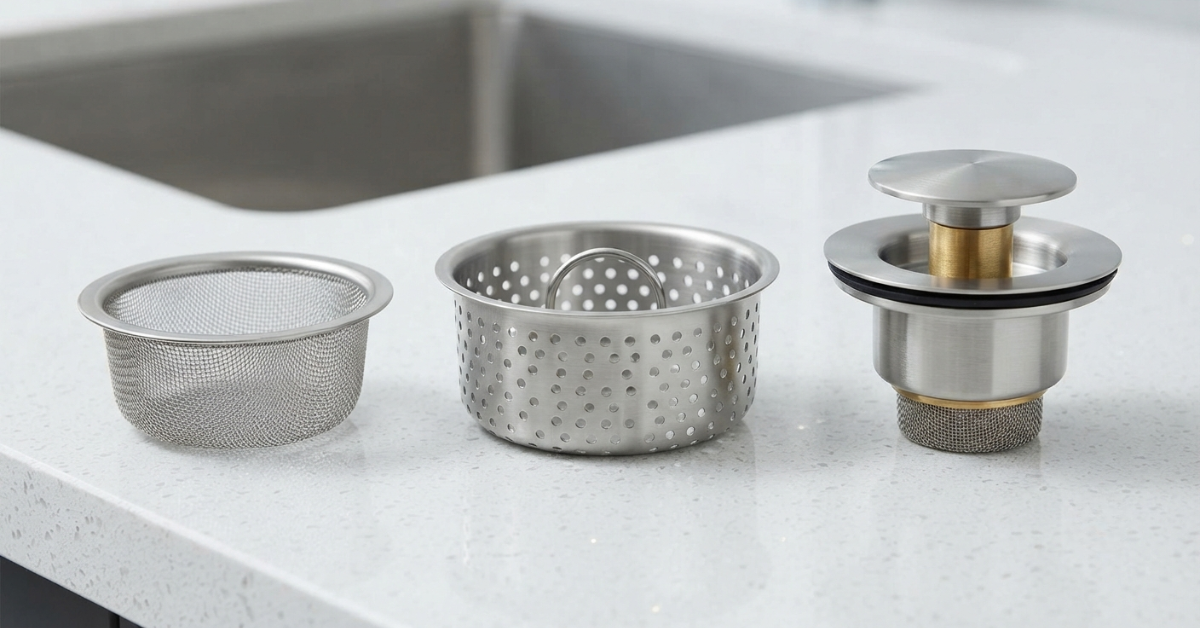
TL;DR: Installing a high-quality stainless steel kitchen sink drain cover prevents organic waste, rice grains, and heavy grease from entering your drainage system. A proper drain strainer eliminates foul plumbing odors, protects under-sink cabinetry from water leaks, and saves thousands of Taka in emergency plumbing repairs.
How Kitchen Sink Drain Covers Prevent Severe Plumbing Clogs
Every time dishes, rice, vegetable peels, or oily utensils are washed, uncollected organic debris slides directly into the sink waste pipe.
Over time, these particles stick to grease layers on the inner pipe walls, creating dense blockages that cause stagnant water, bacterial growth, and severe backups.
+——————+ +——————–+ +———————-+
| Raw Food Debris | —> | Drain Cover Mesh | —> | Smooth Wastewater |
| & Cooking Oils | | (Traps Solids) | | Flow Down P-Trap |
+——————–+
| Easy Daily Empty |
| Into Trash Bin |
+——————–+
The Mechanism of Filtration
A dedicated kitchen sink drain cover acts as a primary mechanical filter at the basin exit point. Fine mesh perforations allow wastewater to pass through smoothly while capturing solid particles as small as 1 millimeter.
- Debris Retention: Micro-perforations stop cooked rice, tea leaves, and fish scales from reaching the P-trap.
- Flow Rate Maintenance: Optimized hole spacing allows up to 15 liters of water flow per minute without bubbling or back-pressure.
- Odor Suppression: Integrated rubber gaskets and precision-fit drop-in caps seal in sewer gas when the sink is idle.
Core Types of Kitchen Sink Drain Strainers Available in Bangladesh
Choosing the correct drainage filtration hardware depends on your sink material, basin depth, and daily cooking volume.
Standard Perforated Metal Strainers
These shallow, bowl-shaped inserts sit directly inside the drain opening. Manufactured from stamped stainless steel, they feature uniform round perforations.
- Best Used For: Standard single-basin stainless steel sinks in rental apartments.
- Primary Benefit: Budget-friendly, simple drop-in fitting, and instant cleaning accessibility.
- Maintenance Level: High frequency; requires manual emptying after every dishwashing session.
Deep Wire Basket Strainers with Stopper Handles
Deep-basket models feature a central post handle and a high-capacity wire mesh basket that drops into a deep sink flange.
- Best Used For: Heavy-duty cooking environments with large daily prep volumes.
- Primary Benefit: Holds up to 5 times more organic waste before restricting water flow.
- Maintenance Level: Moderate; easily lifted out by the center stem without touching wet food waste.
Pop-Up Press-Down Stoppers with Integrated Filters
Modern engineered drain strainers combine a push-button silicone or metal pop-up stopper with a concealed lower filter basket.
- Best Used For: Modern modular kitchens with deep double-basin undertop sinks.
- Primary Benefit: Seals completely for basin soaking while offering sleek aesthetic integration.
- Maintenance Level: Low; dual-function spring core requires occasional rinsing.
Comparing Kitchen Sink Drain Cover Specifications
| Strainer Style | Material Grade | Primary Debris Target | Flow Capacity | Drainage Fit Standard |
| Micro-Mesh Basket | SUS304 Stainless Steel | Rice, Tea Leaves, Fine Seeds | High (18 L/min) | 3.5-inch Standard Flange |
| Punch-Hole Sink Cap | SUS201 Stainless Steel | Vegetable Stems, Packaging | Medium (12 L/min) | 3.0 to 3.5-inch Universal |
| Silicone Edge Catcher | Food-Grade Silicone / ABS | Pasta, Fish Scales, Coarse Waste | High (16 L/min) | Flexible Multi-Size Fit |
| Pop-Up Stopper Unit | Brass Core + Chrome | Liquid Waste, Small Debris | Medium (10 L/min) | Precision 3.5-inch Flange |
Step-by-Step Installation and Replacement Guide
Replacing a worn, rusted, or loose sink strainer ensures a tight seal against water leaks into your underlying modular cabinetry.
1. Turn Off Water Lines & Disconnect Waste Pipe
|– Turn off supply valves under sink
|– Unscrew the PVC waste pipe coupler from main drain thread
2. Remove Old Strainer Flange Assembly
|– Loosen bottom locknut using slip-joint pliers
|– Push strainer assembly up through sink basin hole
3. Apply Plumber’s Putty or Silicone Sealant
|– Clean basin hole rim with rubbing alcohol
|– Apply 1/4-inch bead of plumber’s putty along underside of new flange
4. Seat New Strainer & Secure Locknut
|– Drop new strainer body firmly into basin opening
|– Tighten bottom locknut from underneath using a basin wrench
5. Reattach P-Trap & Perform Leak Test
|– Screw PVC drain pipe onto new strainer threads
|– Run water for 2 minutes to inspect all lower joint connections
Warning: Avoid over-tightening bottom locknuts on acrylic or thin composite sinks, as extreme torque can crack the basin material surrounding the drain hole.
Protecting Under-Sink Cabinets from Water & Moisture Damage
A failing drain cover or loose sink strainer flange leads to hidden water drips beneath the basin. Over time, standing moisture inside lower cabinets causes board swelling, structural decay, and mold growth.
To protect your cabinetry investment, ensure every drainage component works in tandem with high-grade storage systems:
- Impermeable Cabinet Bases: Install moisture-resistant board options beneath the sink basin.
- Pull-Out Waste Integration: Keep cleaning agents organized off the cabinet floor using a dedicated bin holder to prevent spills.
- Sanitary Utensil Storage: Store specialized dish washing tools and spare drain caps in a dedicated cutlery basket mounted inside adjoining drawers.
- Countertop Drippage Control: Pair deep sinks with an elevated plate dish rack equipped with a drip tray to direct excess water safely back into the basin.
Critical Factors When Buying a Kitchen Sink Drain Cover in Bangladesh
Selecting an appropriate sink strainer requires reviewing material grades, dimensions, and structural features tailored to domestic usage.
1. Material Resistance (SUS304 vs. Standard Metals)
Always select Grade 304 stainless steel drain accessories. Premium stainless steel resists corrosion caused by acidic foods, mustard oil, turmeric, and harsh dishwashing detergents.
Low-grade metals rust within months, leading to rough edges that catch hair and lint.
2. Rim Diameter and Flange Depth
Measure your sink’s drain opening across the inner diameter before purchasing a replacement cover.
Standard modern sinks in urban apartments feature a 3.5-inch (90mm) drain hole, while older cast iron or utility basins may measure 2 to 3 inches.
3. Perforation Size & Pattern
- Too Large (>4mm): Allows rice grains and small bone fragments to enter the plumbing.
- Too Fine (<1mm): Clogs within seconds during dishwashing, causing standing water in the basin.
- Optimal Micro-Perforation (2mm to 3mm): Balances rapid fluid drainage with complete solid waste capture.
4. Dishwasher and Heat Compatibility
Ensure the strainer gasket and stopper materials can handle boiling water drained from cooking pots without melting, warping, or losing structural shape.
Preventing Odors and Maintenance Best Practices
Even high-performance drain strainers accumulate grease biofilms over time if left uncleaned. Maintain fresh, odor-free kitchen drainage using these daily and weekly habits:
+——————————————————————-+
| DAILY CLEANING ROUTINE |
| 1. Knock collected food debris into the trash bin after meal prep. |
| 2. Wash the mesh basket with hot water and liquid dish soap. |
| WEEKLY DEEP SANITIZING |
| 1. Pour 1/2 cup baking soda down the exposed drain opening. |
| 2. Follow immediately with 1 cup warm white vinegar. |
| 3. Wait 15 minutes, then flush the pipe with 2 liters of boiling water. |
+——————————————————————-+
Pro Tip: Never pour used cooking oil or melted fat directly down the drain cover. Fat solidifies further down cold P-traps, creating stubborn blockages that no strainer mesh can prevent.
Common Mistakes to Avoid with Kitchen Drain Accessories
- Using Plastic Mesh Covers: Low-weight plastic strainers float when the sink fills with water, allowing food scraps to slide underneath directly into the pipe.
- Removing Strainers for Faster Draining: Pulling out the filter basket to hurry water drainage dumps accumulated waste straight into the main line, guaranteeing future blockages.
- Ignoring Damaged Rubber Seals: Reusing hardened, cracked rubber washers during strainer replacement leads to slow, persistent leaks inside under-sink cabinets.
- Chemical Drain Cleaner Overuse: Pouring harsh caustic acid drain openers degrades rubber flange gaskets and corrodes internal metal strainer threads over time.
2026 Trends in Kitchen Drainage & Waste Management Systems
Modern home design prioritizes concealed utility components and low-touch sanitary fixtures.
- Magnetic Sink Strainer Covers: Direct-fit magnetic rims hold drop-in strainers securely flush against the basin bottom, preventing floating or misalignment.
- Anti-Microbial Matte Finishes: PVD-coated black and gold stainless steel drain covers resist water spots while actively inhibiting bacterial growth on metal surfaces.
- Integrated Sink-Side Dry Racks: Pair modern basins with custom colanders and drying accessories to streamline prep & water disposal.
- Automatic Pop-Up Controls: Countertop-mounted twist knobs allow homeowners to open or seal the drain plug without touching greasy sink water.
Upgrading Your Kitchen Infrastructure
Maintaining clean, functioning drainage systems requires reliable, high-grade fixtures across your workspace.
Equip your home with engineered storage solutions, high-grade hardware, and protective utility accessories to build an efficient, durable kitchen environment.
Next Steps & Resource Directories
Browse Full Directories
Related Products & Hardware
- Kitchen Utility Organizer Rack Benefits for Every Family
- Best Over Sink Dish Rack for a Neat and Modern Kitchen
- 10 Smart Kitchen Storage Solutions to Maximize Space
- Best Kitchen Corner Solution for Smart Storage & Organization
