
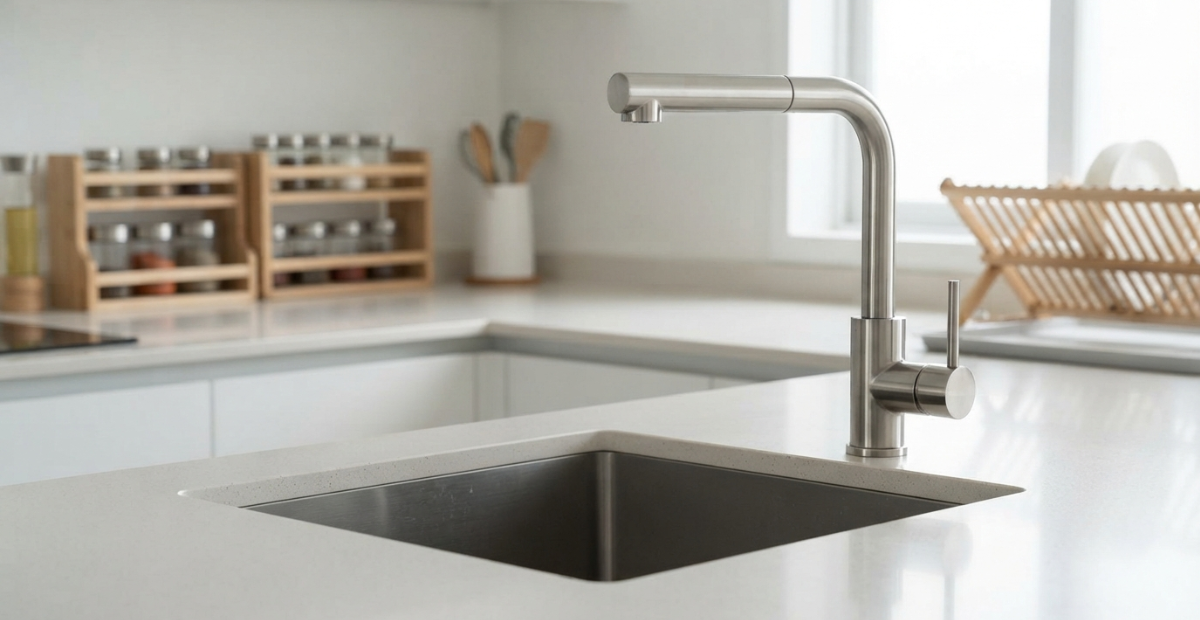
Upgrading to a premium hot and cold kitchen faucet instantly transforms your daily culinary routine by providing precise temperature control for efficient cleaning and food preparation. This guide helps you navigate the technical specifications, material durability, and installation requirements to ensure your new fixture serves your household for years to come.
Choosing the Best Hot and Cold Kitchen Faucet: Key Technical Features
Selecting the right fixture requires looking beyond aesthetics. Modern hardware is defined by its internal engineering and build quality,
Which must withstand the unique water chemistry and usage intensity found in Bangladeshi hot and cold kitchen faucets.
Ceramic Disc Cartridge Technology
The heart of any high-quality faucet is its cartridge. Unlike older compression valves that rely on rubber washers, modern ceramic disc cartridges offer a lifetime of drip-free performance.
They allow for a smooth, single-lever motion that precisely balances hot and cold water flow.
Corrosion-Resistant Finishes
Humidity levels and frequent cleaning with detergents require a robust outer coating. Look for PVD (Physical Vapor Deposition) finishes or high-grade stainless steel (SUS304).
These materials prevent the unsightly pitting and oxidation common in lower-tier chrome products.
Dual-Function Spray Heads
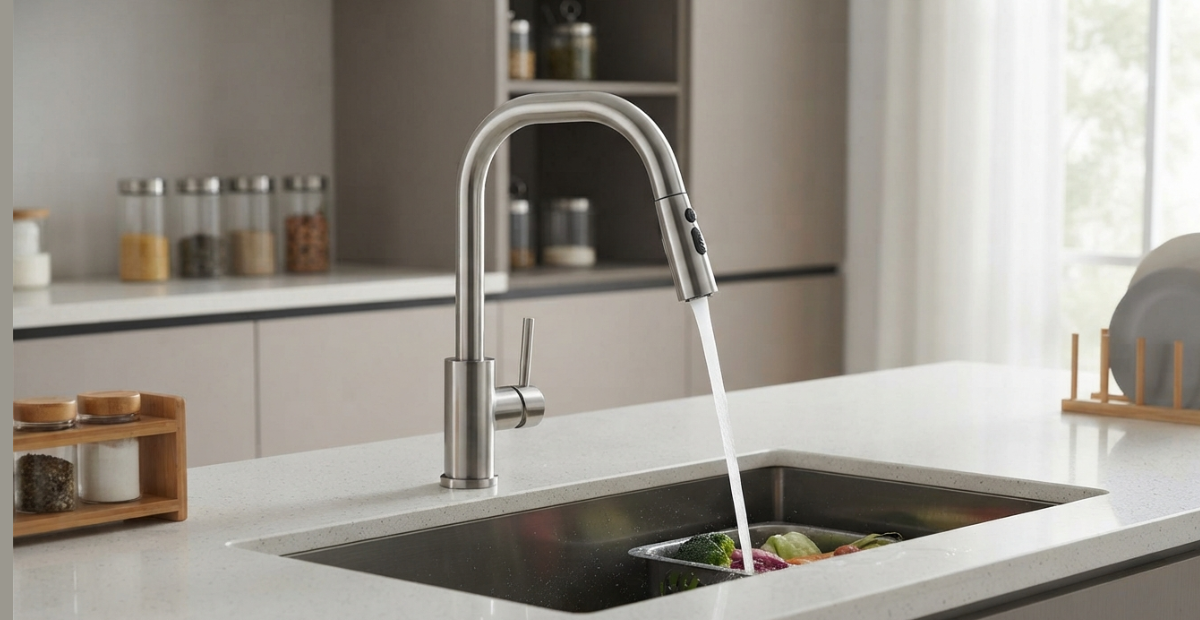
Versatility is essential for washing oversized cookware. A faucet with a pull-down or pull-out spray head allows you to switch between a concentrated aerated stream for filling vessels .
A powerful spray mode for rinsing vegetables or cleaning the sink basin.
Why Plumbing Synergy Matters for Your hot and cold kitchen faucet Layout
Your faucet does not exist in a vacuum; it is part of a complex ecosystem that includes your kitchen sink and surrounding cabinetry. Ensuring that your water delivery system aligns with your storage solutions is critical for an ergonomic workspace.
The Role of Sink Depth and Faucet Height
If you select a high-arch faucet, ensure your sink basin is deep enough to prevent water splashing onto your countertops.
A deep sink paired with a flexiblepull-out faucet creates a professional-grade station that keeps your hot and cold kitchen faucet dry and clean.
Managing Plumbing Under the Sink
When installing a new faucet, use this opportunity to reorganize the area beneath your sink. Utilizing drawer baskets allows you to store cleaning supplies and plumbing tools neatly.
ensuring that the valves for your hot and cold water remain easily accessible for future maintenance.
Installation and Maintenance: A Pro-Active Approach
Proper installation prevents leaks and extends the lifespan of your fixtures. Always prioritize professional-grade sealant and ensure all connections are tightened with the correct tools to avoid damaging the finish.
Step-by-Step Hardware Check
- Water Pressure Testing: Verify that your household water pressure is compatible with the faucet’s flow restrictors.
- Flexible Hose Routing: Ensure inlet lines are not kinked, as this restricts flow and can cause premature hose failure.
- Aerator Cleaning: Every three months, unscrew the aerator and clear out sediment buildup to maintain steady flow rates.
Pro Tip: If you notice a decrease in water pressure, check the faucet aerator first. In many local areas, mineral deposits can clog this component, which is easily cleaned with a simple vinegar soak.
Enhancing Workflow with Optimized Storage
A high-performing faucet is most effective when your surrounding tools are equally organized. Integrate dedicated storage to streamline your workflow during busy meal preparation hours.
Categorizing Your Daily Essentials
Keep your workspace clear by using specialized racks for frequently used items. A spice bottle rack positioned near your prep area minimizes movement,
While a plate dish rack allows for quick air-drying of washed items, keeping your counters clutter-free.
Avoiding Common Mistakes in Faucet Selection
Many homeowners overlook the compatibility between their water heater and their faucet. Ensure your gas stove or water heater setup supports the hot water demands of your new faucet to prevent temperature fluctuations.
- Ignoring Thread Standards: Verify that the faucet inlets match your local plumbing thread standards before finalizing your purchase.
- Prioritizing Price Over Material: Cheap plastic-based internals will inevitably crack under pressure. Invest in solid brass or stainless steel bodies.
- Neglecting Mounting Hole Diameter: Standardize your sink and faucet hole size to ensure a watertight seal that prevents water from seeping into your cabinet base.
Future Trends: Smart hot and cold kitchen faucet in 2026
The trend toward intelligent hot and cold kitchen faucet design is accelerating. Touchless sensors are becoming more common in urban apartments, offering a hygienic, water-saving solution.
Even in traditional layouts, the move toward “smart” hardware such as integrated filtration faucets is changing how we interact with our water supply.
Sustainability and Water Efficiency
Modern faucets now come equipped with aerators that mix air into the water stream.
This reduces consumption without sacrificing the physical sensation of a full water flow, a critical feature for environmentally conscious households.
Next Steps & Resource Directories
Browse Full Directories:
[Main Hub] > [Kitchen Hardware]
Related Articles:
- Kitchen Storage Solutions > Sink & Faucet Accessories
- Related Article: Optimizing Kitchen Workflow with Modular Baskets
- Related Article: Best Gas Stove Performance Tips
