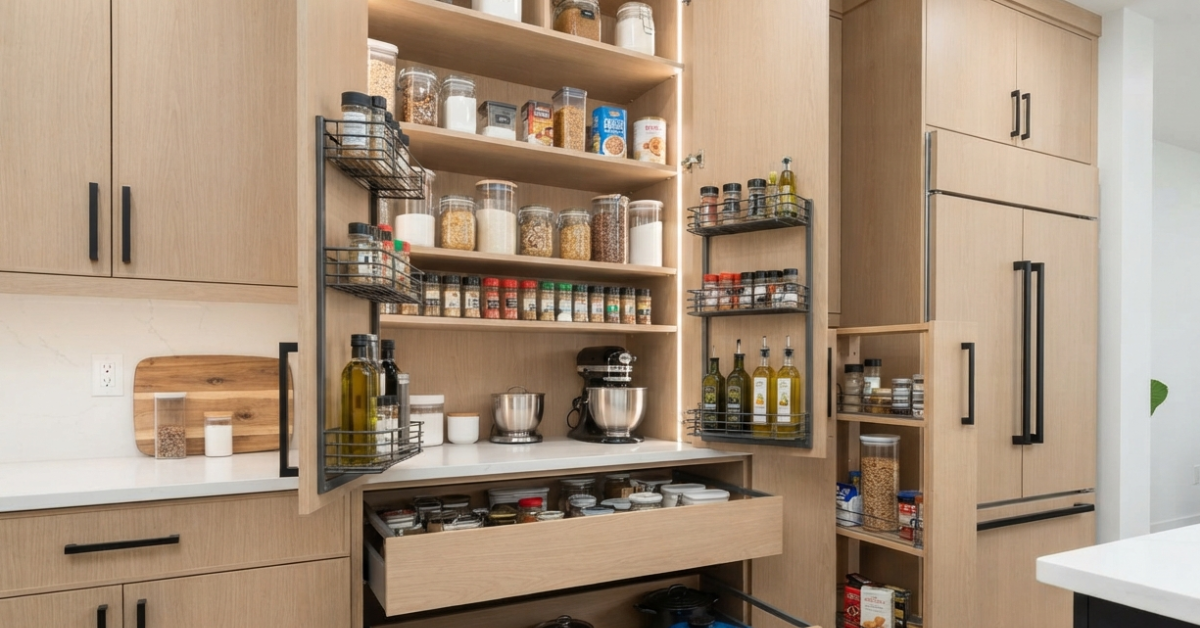
Custom pantry cabinets convert awkward kitchen corners, narrow gaps, and floor-to-ceiling spaces into hyper-efficient storage hubs tailored to your daily cooking workflow. By combining customized interior organizers such as multi-layer pull-out baskets, revolving corner units, and dedicated tall-unit larder systems, a tailored pantry eliminates countertop clutter and maximizes usable storage volume by up to 60%.
Core Storage Layouts: Matching Pantry Designs to Kitchen Workflows
Selecting the right custom pantry cabinet design depends entirely on your available floor space, wall dimensions, and meal preparation habits.
[ KITCHEN PANTRY CONFIGURATIONS ]
│
┌─────────────────────┼─────────────────────┐
│ │ │
▼ ▼ ▼
[ Tall Wall Unit ] [ Walk-In Pantry ] [ Built-In Corner ]
├ Vertical Depth ├ Maximum Volume ├ Swivel Trays
└ Pull-Out Trays └ Custom Shelving └ Zero Dead Space
1. Vertical Tall-Unit Pantry Cabinets
Tall-unit custom pantries utilize vertical wall area, making them ideal for modern apartment kitchens with compact footprints.
- Best For: Narrow kitchen footprints and high-ceiling layouts.
- Key Advantage: Full-height storage with integrated multi-layer pull-out systems.
- Recommended Hardware: 6 layer tall unit basket or a twelve layer larder basket.
2. Built-In Corner Pantry Cabinets
Corner zones frequently become dead space in standard modular kitchens. Custom corner pantries turn deep, hard-to-reach angles into active storage zones using specialized hardware.
- Best For: L-shaped and U-shaped kitchen floor plans.
- Key Advantage: Maximizes corner utility without requiring awkward reaching.
- Recommended Hardware: Magic corner systems or 270 degree revolving basket units.
3. Walk-In and Butler Pantry Cabinets
Walk-in pantries provide expansive storage capacity, allowing complete separation between active cooking zones and bulk item storage.
- Best For: Spacious suburban homes and open-concept floor plans.
- Key Advantage: Dedicated space for small appliances, dry food reserves, and specialized glassware.
- Recommended Hardware: Open shelving paired with multi drawer rack setups.
Material Selection: Durability vs. Moisture Resistance
| Cabinet Material | Best For | Key Benefit | Moisture Resistance | Durability Level |
| Solid Wood / Plywood | Traditional & spacious homes | Classic aesthetic & high structural strength | Medium | High |
| PVC Board | Moisture-prone wet zones | Waterproof & budget-friendly | High | Medium |
| Modular MDF / HDF | Contemporary apartments | Flexible layout & rapid installation | Medium | High |
| Custom Marine Ply | High-humidity / Heavy usage | Tailored design for maximum weight capacity | High | Very High |
Wooden Cabinets
Solid timber and plywood structures offer uncompromised strength for supporting heavy cast iron cookware, grain containers, and canning jars. A proper sealer prevents warp over time.
PVC Cabinets
PVC panels are impervious to humidity, making them an excellent material choice for lower cabinets positioned near sinks, dishwashers, or tropical kitchen environments.
Modular Cabinets
Engineered wood panels paired with durable edge-banding provide clean lines, scratch resistance, and easy hardware integration for contemporary urban kitchens.
Essential Pull-Out Mechanics for Maximum Ergonomics
A well-designed custom pantry cabinets heavily on internal hardware to make every stored item instantly accessible.
Tall Larder Systems
Full-extension larder basket arrays slide forward completely on heavy-duty soft-close runners. This mechanism brings rear items directly into view, eliminating deep cabinet foraging.
Side-Drawer and Multi-Layer Baskets
Multi-tier pull-out drawers keep spices, oils, and small packaged foods arranged logically. Tiered wire or solid-base baskets ensure smaller items remain upright and visible.
Pro Tip: When planning drawer heights, reserve the bottom pull-outs for high-mass items like rice containers and oil jugs to maintain a low center of gravity across your cabinet frame.
Zone-Based Pantry Organization Strategy
Dividing your custom pantry cabinets into dedicated functional zones prevents disorganization and streamlines meal preparation.
+——————————————————-+
| ZONE 1: OVERHEAD (Lightweight / Occasional Use) |
| Paper towels, seasonal dishes, extra dry goods |
+——————————————————-+
| ZONE 2: EYE-LEVEL (High-Frequency Access) |
| Spices, oils, everyday grains, cereal containers |
+——————————————————-+
| ZONE 3: MID-HEIGHT (Preparation & Small Appliances) |
| Mixers, blenders, toaster, baking supplies |
+——————————————————-+
| ZONE 4: BASE LEVEL (Heavy Storage) |
| Bulk rice bags, beverage crates, cast-iron pots |
+——————————————————-+
Zone 1: Top Shelves (Lightweight & Seasonal)
Reserve upper shelves for lightweight items like paper towels, napkins, and specialty kitchen gadgets used only on holidays.
Zone 2: Eye-Level Shelves (Daily Staples)
Keep your most frequently used ingredients cooking oils, spices, breakfast items, and everyday snacks—between shoulder and hip level for zero-effort access.
Zone 3: Middle Counter-Height (Prep & Appliances)
Incorporate a mid-tier appliance station featuring pull-out trays and integrated electrical outlets for your coffee maker, blender, or toaster.
Zone 4: Lower Baskets (Bulk & Heavy Storage)
Position bulk grain storage, heavy stockpots, and canned goods in deep lower pull-out drawers equipped with heavy-duty ball-bearing slides.
Integrating Accent Lighting and Smart Features
Modern custom pantry cabinets extend beyond static shelves by incorporating smart lighting and functional convenience features.
- Motion-Activated LED Strips: Flush-mounted LED channels automatically illuminate shelves when doors open, ensuring high visibility even in deep tall units.
- Power Outlets inside Pantry: Hidden power modules allow small appliances to remain plugged in and ready to use inside appliance garages.
- Ventilation Louvers: Built-in airflow vents prevent heat buildup when housing micro-appliances or fresh root vegetables like potatoes and onions.
Small Kitchen Pantry Hacks: Maximizing Tight Spaces
Even compact apartments can accommodate a custom pantry cabinets system with smart spatial hacks.
The Slide-Out Gap Pantry
Utilize the 6-to-8-inch dead space between your refrigerator and adjacent wall with a custom slim slide-out rack.
This thin frame can comfortably store dozens of spice bottles, canned beverages, and condiment jars.
Over-The-Door Storage Solutions
For walk-in or reach-in pantries with solid timber doors, attach shallow rack systems directly to the door interior to store light spice jars, foils, and cleaning cloths.
Step-by-Step Guide to Planning Your Custom Pantry Installation
Creating a custom pantry cabinets requires methodical planning from initial measurement to final hardware installation.
- Measure Available Dimensions: Record accurate height, width, and depth figures, taking note of baseboards, wall outlets, and door swing radiuses.
- Inventory Your Goods: List everything you intend to store. Group items by height and weight to dictate shelf spacing and hardware load capacities.
- Choose Cabinet Materials: Match your material choice (solid wood, marine plywood, or PVC) to your local humidity conditions and structural requirements.
- Select Internal Hardware Systems: Choose dedicated hardware like 6 layer tall unit basket components, pull-out wire drawers, or revolving corner racks.
- Determine Lighting and Electrical Layout: Plan wiring routes for internal LED strip channels or power outlets before assembling cabinet frames.
- Assemble and Anchor Cabinet Shell: Secure the outer cabinet frame firmly to wall studs using heavy-duty masonry or wood anchors to handle load capacity safely.
- Install Interior Slides and Organizers: Align and level all sliding tracks, soft-close hinges, and pull-out frames to guarantee smooth mechanical operation.
- Load and Organize by Storage Zones: Place heavy items at the base, daily staples at eye level, and light or seasonal items near the top.
Custom Pantry Cabinets Mistakes & How to Avoid Them
- Fixed Non-Adjustable Shelves: Avoid installing immovable shelves. Storage needs evolve over time, so opt for adjustable shelf pin tracks or modular pull-out drawers.
- Inadequate Internal Lighting: Relying solely on overhead room lighting creates dark shadows inside deep cabinets. Always plan low-voltage shelf-level LED strips.
- Overlooking Weight Capacities: Loading heavy bulk items onto standard light-duty drawer slides causes sagging and mechanical binding. Match runner ratings to intended cargo weight.
- Ignoring Ventilation Needs: Enclosing heat-generating appliances or fresh produce without proper ventilation grilles leads to moisture accumulation and premature food spoilage.
2026 Custom Pantry CabinetsTrends
- Concealed Appliance Garages: Fluted or pocket-door cabinets that hide small appliances out of sight to preserve clean, minimalist kitchen lines.
- Sustainably Sourced Bamboo & Timber Panels: Bamboo and eco-friendly engineered panels with low-VOC finishes for healthier indoor air quality.
- Matte Black and Brushed Metallic Hardware: Industrial metal frames and textured metallic finishes replacing traditional polished chrome pull-out baskets.
- Integrated Micro-Pantry Workstations: Pull-out butcher block cutting surfaces combined with dedicated scrap bins and spice racks built directly into tall unit pantries.
